
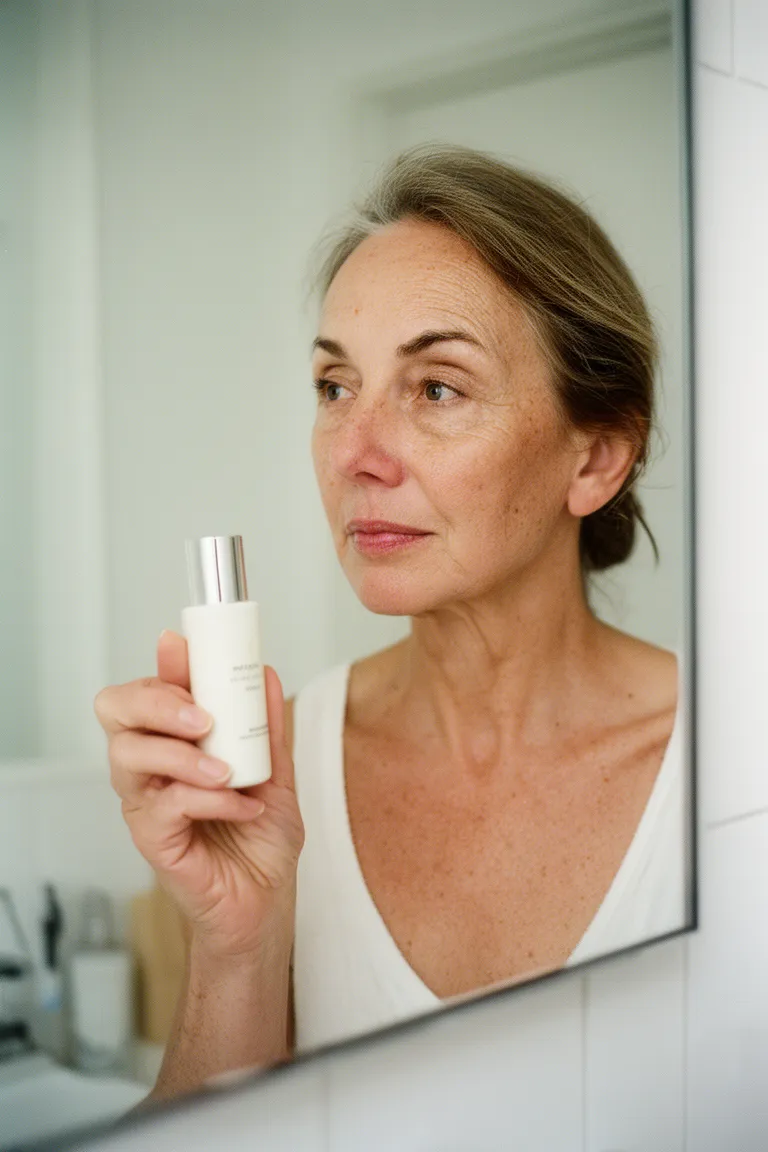
I’ve always believed that taking care of my skin is a form of self-respect, a quiet conversation between me and my reflection. At 48, I’ve navigated the landscape of serums, retinoids, and vitamin C with the dedication of a scholar, my bathroom cabinet a curated museum of hope and chemistry. So, when I finally decided to tackle the silvery, stubborn stretch marks that appeared after my pregnancies—a roadmap of motherhood I’d come to accept but secretly wished to soften—my research was meticulous. Skinception kept surfacing in forums and articles with a compelling, science-backed promise. My decision was made. The next step seemed like a no-brainer: a quick search, a one-click order on Amazon, and it would be at my door in two days. What could be simpler? I was about to learn that my quest for convenience was actually the beginning of a stressful, doubt-filled chapter in my skincare journey. That familiar feeling of being an empowered, savvy shopper evaporated, replaced by a nagging anxiety I hadn’t anticipated when simply trying to do something good for myself. This is the story of how my search for a solution taught me a harder, more valuable lesson about trust, authenticity, and why the easiest path is often the one that leads you in circles.
The Amazon Convenience Trap: My First Misstep with Skinception
The allure was undeniable, a siren song sung in the key of Prime. I was already logged into my Amazon account, a digital home where I buy everything from books to light bulbs. Seeing Skinception there felt like a win, a seamless integration of my need into my existing habit loop. The price seemed comparable, maybe even a few dollars less than what I’d glimpsed on the brand’s site. The promise of Prime shipping meant I could start my new regimen almost immediately, feeding that immediate-gratification part of my brain that’s all too eager when hope is on the line. I clicked “Buy Now” with the confidence of someone who’s mastered online shopping. This was just another item in my cart, not a pivotal purchase for my self-care. I told myself I was being smart, leveraging the system for my benefit. The initial price comparisons and perceived savings felt like a small victory before the product had even arrived.
When the package arrived two days later, that confidence began to fray at the edges like cheap fabric. The box itself was fine—a standard, nondescript Amazon mailer—but the product box inside felt… different. It wasn’t the crisp, high-quality cardboard I’d seen in official product shots online. The colors seemed slightly off, a tad less vibrant, like a photocopy of a photograph. The logo lacked a certain sharpness. I rationalized it away. It’s just a printing batch variation, I thought. Different factory, different day. The seal was intact, so I proceeded, pushing down a flutter of unease. But the seed was planted. Here I was, holding a product I had invested significant hope and research into, and its very presentation felt vaguely inauthentic, almost disposable. This was my first tangible step toward addressing a very personal, vulnerable concern, and it already felt compromised by the impersonal, warehouse-sourced nature of the transaction. The red flags were subtle, but for someone as detail-oriented as I am about what goes on my body, they were neon signs blinking in a fog of my own wishful thinking.
Spotting the Fakes: What Made Me Doubt My Amazon Skinception Order
My skepticism truly ignited, moving from a flutter to a flame, the moment I twisted open the tub. The cream’s texture was my first real, visceral alarm bell. Based on every description and video review from the official channels, the formula was supposed to be a rich, luxurious cream that absorbed without a trace of greasiness. What I scooped out was thinner, almost slightly grainy, separating a bit at the edges. It had a faint, chemically scent underneath the faint perfume, a plastic-like note that wasn’t mentioned anywhere. It didn’t feel premium; it felt mass-produced and cheap. This glaring inconsistency in product consistency was a major red flag I could no longer ignore.
I immediately went back to the Amazon listing, something I should have done with more caution before buying. The seller name was a jumble of letters and numbers, “FGH_Retail_Group_22,” not “Skinception” or any authorized retailer I could recognize. The reviews, which I now scrutinized with a detective’s eye, were a polarized mess. Dozens of “Life-changing!” reviews sat right alongside an equal number of “Total scam, didn’t work at all” and “This feels fake” warnings. There was no way to verify seller authenticity on Amazon in that moment that felt definitive or safe. I spent an anxious evening down a rabbit hole, learning about common signs of counterfeit supplements. I checked for a batch number or a clear expiration date on my tub; the printing was smudged and hard to read, stamped rather than laser-etched. The fear crystallized. This wasn’t just about wasting $50. It was about what I might be putting on my skin, my largest organ. Were the active ingredients even in there? Was it safe, or was it a jar of glorified lotion mixed in some unregulated facility? This was supposed to be a hopeful journey toward feeling better in my skin, and instead, I was paralyzed with doubt. Every night, as I applied the cream, instead of a sense of ritual, I felt a knot of anxiety tighten in my stomach. Is Skinception on Amazon real or fake? That question, which I found echoed on Reddit threads and beauty forums, was now my own haunting refrain. My experience was mirroring that deep-seated distrust I’d read about, and it was a terrible, lonely way to start a treatment meant to build confidence.
The Turning Point: From Anxiety to Action
I hit my breaking point on a Tuesday night. I was standing in my bathroom, the suspect tub in my hand, and I realized I was dreading the application. This product, meant to be an act of self-care, had become a source of stress. I had two choices: continue this charade, using a product I deeply distrusted and likely seeing no results (or worse), or cut my losses. The concept of “sunk cost” is powerful, but the cost of my peace of mind was higher. I opened my laptop, but this time, I didn’t go to Amazon. I typed “Skinception official website” directly into the search bar. It was a small act of defiance against my own ingrained habits. Navigating to the official Skinception store felt palpably different immediately. This wasn’t a chaotic marketplace; it was a dedicated destination. The site was clean, informative, and rich with details about the science, the clinical studies, and the brand’s philosophy on quality control. I found a real customer service team—a phone number, an email, a “Contact Us” form that promised a response from the brand itself, not a third-party seller. I read their secure payment gateway details and a clear privacy policy. For the first time in weeks, I felt like I was dealing with a real entity that stood behind its product.
| Where I Shopped | The Emotional Experience | Realistic Timeline to Trust | The Key Lesson |
|---|---|---|---|
| Third-Party Marketplace (Amazon) | Anxiety, doubt, constant second-guessing | Immediate distrust upon delivery | Convenience often comes at the cost of certainty. |
| Official Brand Website | Confidence, clarity, a sense of partnership | Trust established at point of purchase | Authenticity provides a foundation for real results. |
| Physical Retailer (if available) | Tangible verification, but limited selection | Trust based on store reputation | Seeing is believing, but access can be limited. |
| Social Media Direct Sales | High risk, minimal accountability | Extreme caution required | If it seems too good to be true, it almost always is. |
I placed my order from the official store. Yes, with shipping, it might have come to a few dollars more than my Amazon Skinception order, but I was reframing the value entirely. I wasn’t just buying a cream; I was buying guaranteed product authenticity and freshness directly from the source. I was investing in the elimination of mental clutter. I also discovered they had an exclusive “Buy 2, Get 1” bundle, which, when I did the math, actually provided better long-term value per ounce than any single tub on Amazon. The peace of mind was instant and profound. The transaction was no longer a stressful gamble; it felt like a direct partnership with the brand whose results I was seeking. I finally understood that buying Skinception online from the official store vs Amazon wasn’t a financial calculation—it was an emotional and practical one, centered on trust, safety, and giving a solution a real chance to work by ensuring it was genuine.
Why I Switched: The Peace of Mind Only the Official Skinception Store Offered
The benefits of switching became clear even before the new package arrived. The confirmation email I received wasn’t a generic Amazon receipt; it was a detailed order summary from “The Skinception Team,” with clear shipping estimates and a direct link to track my package through their carrier. It felt professional and attentive. When the official package did arrive, the unboxing experience itself was different. The product was housed in a sturdy box with clean, vibrant printing. The tub itself felt substantial, heavy with quality. The seal was a crisp, clear tamper-evident film. And the cream inside was the exact texture I’d read about: luxuriously thick, perfectly smooth, and with a subtle, clean botanical scent that dissipated quickly. Applying it that first night was a revelation. There was no hesitation, no knot in my stomach. It became a true self-care ritual, a moment of quiet hope rather than anxious obligation.
Beyond the product itself, the peace of mind extended to the entire ecosystem. Knowing I had direct access to customer support and product experts at the official store meant that if I had a question about application, timing, or even just wanted to understand the science better, I could ask the source. I wasn’t left to scour conflicting forum posts. This understanding of the brand's commitment to quality control transformed my mindset. I was no longer a passive consumer hoping for the best from a faceless seller; I was an active participant in a process backed by a company that had a reputation to uphold. The secure payment and discreet shipping options were the final, reassuring touches. My Skinception official store vs Amazon reviews were now being written in my own mind, and the contrast was staggering. One was a story of doubt and friction; the other was becoming a story of clarity and progression.
My Real Results: Was the Official Store Experience Worth the Extra Effort?
With the authentic product in hand and my mind at ease, I committed to a disciplined routine. Morning and night, without fail, I massaged the cream into my stretch marks. This time, there was no subconscious resistance. Around the three-week mark, I noticed the first tangible change: the skin on my thighs and abdomen felt profoundly more hydrated and supple. It had a bouncy, healthy feel it hadn’t possessed in years. The silvery lines themselves seemed… softer, less like etched cracks and more like subtle shadows. This was a textural improvement I could feel with my fingertips.
By the six-week mark, the difference was something I could see in the mirror without squinting or angling the light just so. The stretch marks hadn’t magically vanished—I’m a realist, and does Skinception work if bought from Amazon is a moot point if the product is fake—but they had faded noticeably. The silvery sheen had diminished, and the marks had taken on a more skin-toned, pinkish-brown appearance that blended in much better. The consistency in product quality from the official store was clearly translating to consistent, cumulative results. My Skinception results after buying from the official store were validating in a way that went beyond the physical. The “extra effort” of ordering direct—which amounted to maybe five extra minutes of website navigation and a few more dollars—was revealed as the illusion it was. The profound benefit was the total elimination of mental and emotional friction. The peace of mind was worth infinitely more than any perceived savings. I was no longer just using a cream; I was confidently following a trusted protocol, and my skin was responding. That confidence bled into how I carried myself. The journey became empowering. Is the best stretch mark removal cream worth it or should I try other treatments? For me, the answer became clear when I ensured I was using the genuine article.
Scientific Evidence
Navigating Your Own Skinception Purchase: Lessons Learned from My Journey
If my story resonates with you—that mix of hope, frustration, and fear of being duped—here is my hard-won advice, offered not as an expert but as a fellow traveler on this confusing road. First, identify the official brand website. Don’t just search “[product name]”; search “[brand name] official site.” Look for the verified checkmark in search results, the URL that matches the brand name exactly, and a site that feels corporate, content-rich, and transparent. Bookmark it. This is your source of truth.
Second, become a mindful detective. When you’re on a product page, check for the basics: a secure checkout (“https://” and a padlock icon) and a clear privacy policy. But go deeper. Look for detailed ingredient lists, clinical study references, and “About Us” pages that tell the brand’s story. If you’re tempted by a deal on Amazon or elsewhere, pause. Verify the seller authenticity. Is it the brand itself, or an authorized retailer listed on the brand’s official “Where to Buy” page? If it’s a random name, the risk isn’t worth the $8 savings. The real cost isn’t the money; it’s the wasted time, the dashed hopes, and the potential risk to your skin. My journey taught me that why I stopped buying Skinception on Amazon boils down to self-advocacy. Investing in your well-being deserves the security of knowing you’re getting exactly what you’re paying for. You are worth that certainty. I also learned that for concerns like I noticed fine lines around my eyes suddenly in my late 30s what changed, authenticity is just as crucial.
The Bigger Picture: Authenticity in an Age of Convenience
This experience fundamentally shifted my perspective on online purchases, especially for anything I ingest or apply to my body. We live in an age of incredible, seductive convenience, but I’ve learned that convenience can sometimes act as a smokescreen, subtly distancing us from the authenticity of what we’re buying and the integrity of who we’re buying from. My Skinception official store vs Amazon dilemma was a microcosm of a larger, quieter issue in our consumer culture. It’s about reclaiming the intention behind our purchases. Am I buying for instant, frictionless delivery, or am I buying a specific, guaranteed result from a trusted entity? For example, understanding the Effects of exercise, metformin and their combination on glucose metabolism in individuals with abnormal glycaemic control: a systematic review and network meta-analysis, while not directly related to skincare, highlights the importance of understanding the source and methodology behind any health-related claims.
For something as personal and emotionally charged as a skincare product aimed at altering my appearance and, by extension, my confidence, the latter must win every single time. The emotional energy I spent for weeks worrying about fakes, parsing dubious reviews, and feeling cheated was a real, draining tax on my mental space. Going direct to the Skinception official store gave me back that energy. It allowed me to pour all my focus into the experience and the results, not the logistics and the fear. This lesson has since bled into other areas of my life. I now take those extra minutes to research brands, read their stories, and buy directly when it matters. It’s a small act of consumer mindfulness that pays massive dividends in trust, satisfaction, and ultimately, results. The official store isn’t just a vendor; it’s the guardian of the brand’s promise. And when you buy from them, you become a part of that promise, not just a transaction in a warehouse log.
Frequently Asked Questions

Q: Is Skinception on Amazon real, or are they often fakes? A: Based on my stressful and disappointing experience, while it's possible that some sellers on Amazon may offer authentic products, the platform's structure makes it a high-risk gamble. Amazon commingles inventory from different sellers, meaning even if you order from a seemingly reputable third-party, the item pulled from the shelf could be from a different, counterfeit supplier. The prevalence of polarized, suspicious reviews for Skinception on Amazon was a huge red flag for me. After my journey, I firmly believe the only way to guarantee you are getting a real, safe, and effective product is to purchase directly from the official Skinception store.
Q: What are the most common signs that a Skinception product might be fake? A: From my encounter and subsequent research, watch for these red flags: packaging that feels flimsy or has slightly off-color, blurry, or smudged printing. The texture of the cream is a major tell—authentic Skinception is a rich, smooth cream, not thin, watery, or grainy. A strong chemical or plastic-like scent is a warning sign, as the real product has a subtle, clean fragrance. Always check for a clear, laser-etched batch number and expiration date; smudged or stamped codes are suspicious. If anything feels "off" compared to the detailed descriptions and videos on the official site, trust your intuition.
Q: Was the price on the official Skinception store much higher than on Amazon? A: This was a surprise. The base price was actually very similar. While my counterfeit Amazon purchase was a few dollars cheaper, the official store almost always has exclusive offers, bundles (like "Buy 2, Get 1 Free"), and loyalty discounts that provide far better long-term value. When you factor in the guaranteed authenticity, direct customer support, and any official money-back guarantee, the overall Skinception price official site vs Amazon debate becomes a clear win for the brand's site. You're investing in certainty, not just a commodity.
Q: How long did it take for you to see real results after switching to the official product? A: With the authentic product, I noticed a significant improvement in skin hydration and suppleness within the first 3-4 weeks. Visible fading and a noticeable softening of the appearance of my stretch marks became clear and consistent around the 6-8 week mark. It's crucial to understand that consistency in application (twice daily, every day) is key, and that foundation only works if the product is genuine. Fake products will show little to no effect, leading to frustration and wasted time.
Q: What should I do if I already bought a Skinception product from Amazon and I'm worried it's fake? A: First and foremost, stop using it immediately. Your skin's health is paramount. Then, contact the seller through Amazon's messaging system to voice your concerns and request a return/refund, citing "item not as described" or "inauthentic product." You can also report the listing to Amazon. Consider it a lesson learned. Don't fall for the sunk-cost fallacy. Redirect your efforts and resources to purchasing from the official store. The peace of mind and the potential for real results are worth far more than recouping the cost of a counterfeit item.
Q: Does the official Skinception store offer good customer service? A: In my experience, yes, absolutely. When I had a question about my order status, I received a clear, courteous, and helpful email response within a business day. Having direct access to a team that represents and understands the brand, rather than a generic third-party seller who may sell thousands of different items, makes a world of difference. They are invested in your satisfaction because you are their direct customer. This supportive relationship is a core, often overlooked part of the value you receive when you choose to buy Skinception online from the official store.
📌 Love this guide? Save it on Pinterest!
Pin Skinception on Amazon vs Official Store: My 2026 Journey to Authenticity to your board so you can come back to it later.

