
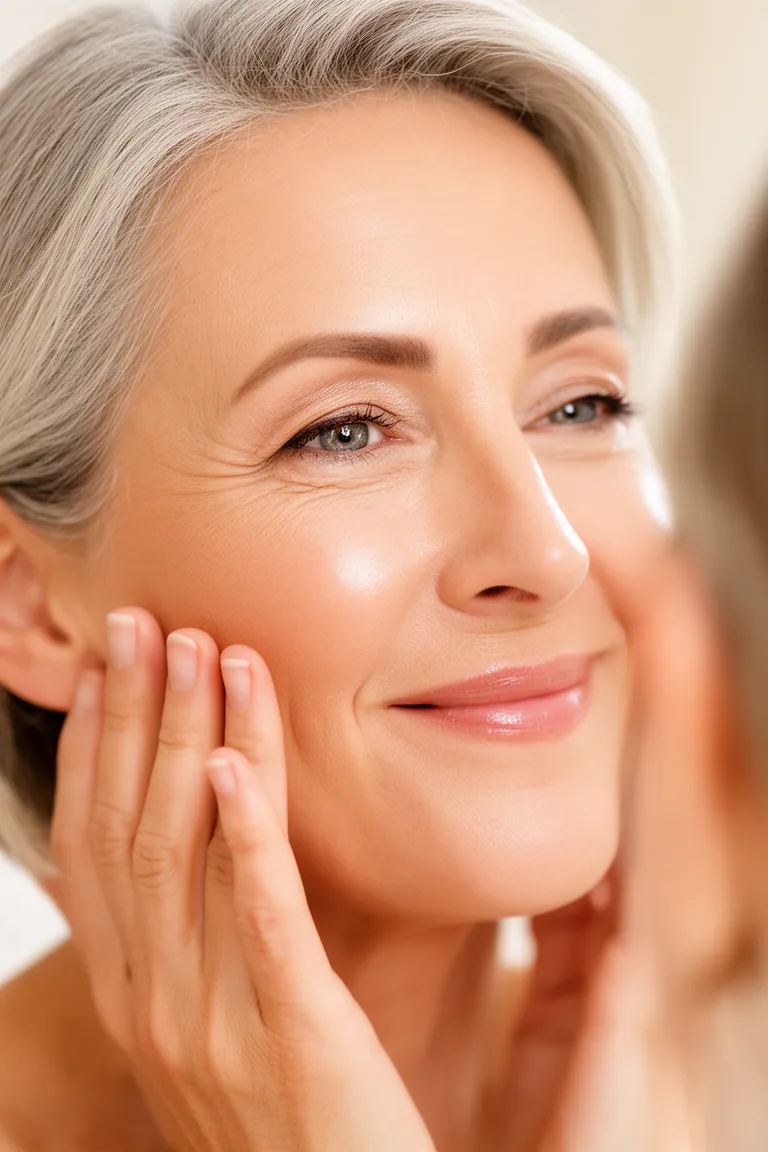
I was standing in front of my bathroom mirror, gently pressing the skin of my cheek, when I noticed it. It wasn’t a new wrinkle or a sudden sunspot. It was a feeling. When I let go, the skin didn’t snap back with that familiar, youthful spring. It just… settled. Slowly. I was 47, and for the first time, my skin felt less like resilient fabric and more like tired, thin silk. The worst part? I’d done everything I was supposed to do. I ran three times a week, ate my greens, drank my water, and had been a religious sunscreen wearer since my thirties. I felt betrayed by my own healthy habits.
That moment sparked a frantic, expensive quest to restore skin elasticity after 40. I bought every jar promising “lifting,” “firming,” and “collagen-boosting.” I’d slather on the rich creams, and in the morning, my skin would look plump and dewy. I’d feel a flicker of hope. But by midday, that hydrated glow would fade, and the underlying reality remained: my skin still lacked its fundamental bounce. It was just temporarily well-moisturized. The frustration was profound. I was trying everything, but my skin wasn't getting genuinely firmer.
I felt stuck in a cycle of hope and disappointment, convinced I was missing some secret product. It wasn’t until I stepped back from the marketing hype and dove into the actual science of skin that I had my real breakthrough. The answer wasn’t in a miracle cream. It was in understanding what elasticity truly is, why my good habits were merely the foundation and not the fix, and building a realistic, consistent routine around a few key, evidence-backed principles.
The Morning I Noticed My Skin Had Lost Its Bounce
That quiet moment of pressing my cheek wasn't about vanity; it was a visceral confrontation with a change I couldn't control. I realized skin elasticity isn't just about looking young—it's about that structural integrity, the subtle tension that keeps everything looking lifted and smooth. It’s the difference between a crisp, new cotton sheet and one that’s been lovingly washed a thousand times—softer, yes, but without the same crisp hold. In your 40s, the decline of collagen and elastin, the protein fibers that act like your skin's scaffolding, accelerates. Even if you've worn sunscreen, decades of cumulative sun exposure (what dermatologists call solar elastosis) quietly degrade these fibers, like sunlight slowly fading a favorite photograph. Genetics play their part, too. The result isn't just sagging; it's thinner skin, a crepey texture, and that loss of rebound I felt.
For weeks, I scrutinized every reflection, my anxiety growing with each glance in a department store mirror or a car’s rearview. I wondered if this change was typical or a sign of something else. Here’s what I learned from talking to experts and reading: a gradual loss of firmness in your 40s is a normal part of intrinsic aging, amplified by extrinsic factors like sun and pollution. However, if you notice sudden, significant sagging, especially on one side of the face, or skin that feels unusually thin and bruises easily, it’s wise to consult a doctor to rule out other health factors. For me, it was the slow, steady shift of time, finally making itself known in a way I could feel with my own fingertips.
Why My Healthy Routine Wasn’t Enough to Restore Skin Elasticity After 40
This was my biggest point of confusion and the heart of my frustration. I was doing the work! How could this still be happening? My journey to understand this was humbling, like realizing I’d been diligently polishing the exterior of a car while the engine was quietly wearing down. I learned that while my healthy lifestyle was absolutely supporting my skin's overall health and appearance, it was primarily playing a magnificent defense. Exercise boosts circulation, a good diet provides building blocks, and sleep is crucial for repair. But these habits can't single-handedly reverse the structural laxity that comes from decades of collagen breakdown.
Think of it like this: my sunscreen was heroically preventing new damage, but it couldn't undo the microscopic solar scars already etched into my skin's support layers. My antioxidant-rich diet was fighting free radicals at the molecular level, but it couldn't command my fibroblasts—the cells that make collagen—to suddenly produce at their 25-year-old rate. Hydration, which I got from both water and moisturizers, plumps up skin cells like plumping up a pillow—it improves texture and fine lines beautifully—but it doesn't rebuild the pillow's internal springs. I had to accept that supporting skin and restoring its underlying architecture are two different projects. This was the core of my emotional complaint: I was already using sunscreen, eating well, and exercising, but still noticing the sagging and lost firmness. My routine was a shield, but I needed tools for repair, too. best anti aging skincare routine for men who already use sunscreen.
The Turning Point: Letting Go of the "Miracle in a Jar" Mentality
I hit my limit after purchasing a wildly expensive "clinical-grade" firming cream from a counter with gleaming lights. The sales associate spoke with such conviction about transformative lifting and renewed bounce. After two months of religious use and a significant dent in my wallet, the only transformation was in my bank account and my level of skepticism. That jar became a symbol of my misplaced hope. That was the moment I decided to stop looking for a hero product and start looking for a strategy.
I began reading dermatologist blogs and scientific reviews instead of beauty magazine ads. I realized I was chasing a topical solution for a dermal-level problem. Most creams, no matter how luxurious, cannot penetrate deeply enough to significantly rebuild collagen on their own. Their job is to create the optimal environment on the surface and in the upper layers for skin to repair itself and to deliver ingredients that can gently signal for that repair to happen. I was expecting a construction crew from a cream, when at best, it could be a helpful foreman. So, I cleared my shelf of anything promising "instant lift" or "firming in 7 days." In their place, I built a new arsenal based on three pillars: prevention, support, and gentle stimulation. I didn't just buy new products; I adopted a new, patient philosophy.
The Firming Creams I Stopped Buying—and What I Used Instead
Out went the fragrant, thick creams with vague, glorious claims. In came a simpler, more intentional lineup that looked almost clinical in comparison. My first and non-negotiable pillar became a broad-spectrum SPF 50. I finally understood it as the most powerful anti-aging and elasticity-preserving product in existence, not just a summer beach item. It was the daily guard at the gate, preventing the very damage that degrades elasticity. Prevention is the non-negotiable bedrock.
Next, I cautiously introduced a retinoid. I started with an over-the-counter retinol serum, applying just a pea-sized amount twice a week, slowly building tolerance over a month. This wasn't for immediate firming; it was a long-term investment in my skin’s future. Retinoids work at a cellular level to encourage collagen production and normalize skin cell turnover. They're one of the few topicals with decades of research backing their efficacy for photoaging. For my moisture barrier—which I now knew was crucial for overall skin health and resilience—I switched to a simple, ceramide-rich moisturizer to counteract any dryness or irritation from the active ingredients. why my stretch mark cream isn’t working even though I use it every day.
I also added a vitamin C serum in the mornings. Its role wasn’t to firm, but to act as an antioxidant shield, protecting my new collagen from free radical damage, and to support collagen synthesis. I looked for peptides in my night cream, understanding they are like little messengers that can signal to the skin to behave in a more youthful way. And I stopped viewing hyaluronic acid as a firming agent and instead appreciated it for what it is: a brilliant humectant that draws water into the skin, keeping it supremely hydrated, which always looks healthier and plumper. This shift—from chasing a single miracle to employing a targeted, multi-angle approach—changed everything. It turned my skincare from a hopeful guess into a deliberate practice.
What No One Tells You About Collagen Supplements and Skin Elasticity
Amidst my cream purge, I also wrestled intensely with the collagen supplement question. The ads were everywhere: drinkable collagen for firmer, bouncier skin! I wanted so badly for it to be the easy, ingestible answer. I tried a powdered version for three months, religiously mixing the unflavored powder into my morning coffee. My nails got noticeably stronger, and my joints felt better, which was a welcome, unexpected bonus. But did my skin look fundamentally firmer or more elastic? Not in any way I could honestly see or feel. The science, as I discovered, is still evolving and nuanced. Functional integrity of aging skin, from cutaneous biology to anti-aging...
While some promising studies show improved skin hydration and elasticity from specific, hydrolyzed collagen peptides, the evidence isn't yet robust enough to call it a definitive fix for sagging caused by structural loss. Here’s the simple, disappointing truth I learned: the collagen you ingest is broken down into amino acids in your gut and distributed throughout your body where it’s needed; there's no GPS directing it to your cheeks or jawline. Your body uses those building blocks where it sees fit. I realized I was potentially wasting money hoping for a direct fix. Instead, I focused that budget on ensuring my daily diet had plenty of vitamin C (crucial for collagen formation), zinc, and high-quality protein—the actual, proven building blocks my body needs to make its own collagen efficiently. Supplements might be a supportive player for some, but they weren't the cornerstone I had hoped they would be for restoring skin elasticity after 40.
Scientific Evidence
What Results Were Realistic After Eight to Twelve Weeks
This was the most important lesson in patience I've ever learned. When you stop chasing instant gratification, you start noticing real, incremental change. At the eight-week mark of my new, simplified routine, I didn't look "lifted." There was no dramatic before-and-after photo to share. But my skin's texture was undeniably smoother to the touch. The fine lines around my eyes seemed softer, less etched, more like faint pencil marks than permanent ink. how to get rid of fine lines around eyes. My complexion was more even and carried a quiet radiance because it was consistently hydrated, calm, and not irritated. This was the "glow from health" I’d been missing—the glow of skin that’s functioning well, not just being masked.
True collagen-related changes, like modest improvements in firmness and elasticity, take consistent effort over six months to a year. The timeline finally made sense once I understood that collagen turnover in the skin is a slow, biological process. You’re essentially convincing your skin to rebuild its foundation, brick by brick, which doesn’t happen overnight. I also learned to clearly manage my expectations regarding topicals versus professional treatments. While my retinoid and sunscreen were doing vital repair and prevention work, significant lifting of sagging tissue usually requires energy-based treatments like radiofrequency, ultrasound, or laser, which can safely heat the deeper dermal layers to stimulate a more dramatic, controlled collagen remodeling response. Knowing this helped me appreciate my topical results for what they were—meaningful, foundational improvements—and plan for a future dermatologist consultation for more targeted concerns without feeling like my diligent home routine had failed.
| Approach | Realistic Goal | Typical Timeline for Visible Change | Key Thing to Know |
|---|---|---|---|
| Lifestyle & Basic Care (Sunscreen, Moisturizer) | Maintain current elasticity, improve hydration & texture | 4-8 weeks for better texture/glow | The essential foundation. Prevents further loss but doesn’t reverse existing sagging. |
| Lifestyle + Targeted Actives (Retinoids, Vitamin C, Peptides) | Stimulate new collagen, improve firmness & resilience | 8-12 weeks for texture; 6+ months for firmness | The most impactful at-home path. Requires consistency and patience with gradual introduction. |
| Topicals + Professional Treatments (Microneedling, Laser, etc.) | Address moderate sagging, create more significant lifting | Varies per treatment; results often build over 3-6 months | Topicals maintain and enhance results. Best for when topical-only progress has plateaued. |
My Simplified Elasticity Routine for Real Life
All this research, trial, error, and eventual understanding distilled down into a routine that is sustainable, effective, and doesn't feel like a part-time job. Here’s what my week looks like, stripped of all the fluff:
Morning (5 minutes max): A gentle, creamy cleanser or, more often, just a splash of lukewarm water. While my face is still damp, I apply a few drops of a vitamin C serum—this helps it absorb better. I follow with a simple peptide moisturizer or one with ceramides. And then, the non-negotiable: a generous application of my broad-spectrum SPF 50. This is my armor for the day.
Evening (7 minutes): A thorough but gentle cleanse to remove every trace of sunscreen and the day's grime. This step feels like a reset. Three nights a week (Mondays, Wednesdays, Fridays), I wait 15 minutes for my skin to be completely dry, then apply a pea-sized amount of my retinol serum. I follow it with my barrier-support moisturizer. On the other four “recovery” nights, I skip all actives. I might use a hydrating serum with hyaluronic acid and then a richer, more emollient moisturizer to let my skin fortify itself and just be nourished.
The golden rule I live by is to introduce only one new active at a time and to listen to my skin like it’s telling me a story. If it’s stinging, red, or tight, I pull back. I’ll skip a retinol night and just moisturize. Consistency with a simple, protective routine beats a complicated, irritating one every single time. I also doubled down on the lifestyle supports that don’t come in a bottle: trying (and often failing, but trying) to manage stress (a huge collagen degrader), protecting my skin from friction by sleeping on a silk pillowcase, and never, ever, under any circumstances, skipping my sunscreen. Not on cloudy days. Not on quick errand runs. Never.
How I Track Progress Without Misleading Myself
I stopped taking harsh, close-up selfies in the cruel, bright light of my bathroom. Those photos only served to highlight flaws and fuel anxiety. Instead, I pay attention to how my skin feels. Does it feel supple and smooth when I wash it? Does my makeup sit more evenly, without catching on dry patches? I also notice the "drape" of my skin—when I press it lightly, does it seem to have a bit more resilience, a quicker return? These subtle, tactile improvements are my real markers of success.
I also pay attention to the absence of negatives: less irritation, fewer random dry patches, no more stinging when I apply products. Restoring skin elasticity after 40, I’ve learned, is a marathon of consistent care, not a sprint to a photoshopped finish line. The empowerment doesn't come from looking 30 again; it comes from understanding my skin, nurturing it with what it truly needs, respecting its timeline, and finally making peace with its beautiful, evolving story. The journey itself—from frustrated and misled to informed and intentional—became the real victory.
Frequently Asked Questions

Q: How long does it really take to see improvements in skin elasticity after 40 when creams are not working?
A: You need to think in seasons, not weeks. If your current creams (likely just moisturizing) aren't working, switching to a routine with actives like retinoids changes the game, but the clock restarts. You may see a smoother texture and better hydration within 4-8 weeks. However, genuine changes in firmness and elasticity—the kind you can feel, not just see—typically take a minimum of 3-6 months of unwavering consistency. Patience isn’t just a virtue here; it's a requirement for resetting your expectations and seeing real change.
Q: Can retinol actually restore lost elasticity, or does it just smooth wrinkles?
A: This was my biggest hope, and the science supports it. Retinol and other retinoids are some of the most proven topical ingredients for addressing the structural issues of aging. They work by speeding up cell turnover, blocking enzymes that break down collagen, and, crucially, stimulating your skin's own collagen production. So, while they do smooth fine lines, they are also actively working to improve the skin's underlying support structure. Over many months, this translates to better firmness and elasticity—it’s not an instant lift, but a gradual rebuilding.
Q: I have sensitive skin. Are retinoids and active ingredients still an option for me to improve skin elasticity after 40?
A: Absolutely, but caution and a "less is more" approach are your best friends. Start with a very low concentration retinol (0.25% or 0.3%) and apply it only once a week, over your moisturizer, to buffer it. Always listen to your skin—if you experience persistent redness or burning, take a break for several days. For the sensitive-skin community, focusing intensely on barrier repair with ceramides, cholesterol, and niacinamide, coupled with a daily mineral sunscreen, can yield significant improvements in skin resilience, thickness, and appearance without the irritation. Building a strong barrier is the first step before any aggressive stimulation.
Q: What should I realistically look for in skincare products if my main goal is improving elasticity?
A: Look beyond the "firming" label on the front. Turn the bottle over and seek out key ingredients in the formulation: Retinol/Retinoids (for collagen stimulation), Peptides (like Matrixyl or copper peptides for signaling), Vitamin C (L-ascorbic acid for antioxidant protection and collagen synthesis support), and Barrier-supporting ingredients (ceramides, niacinamide, fatty acids). The product should ideally be fragrance-free to minimize irritation. Remember, a simple routine with one or two of these well-formulated actives, used consistently, is far more effective than a complicated regimen of products with fluffy claims.
Q: Are professional treatments the only real solution for sagging skin, or can a good routine help?
A: Topical skincare is essential for prevention, improvement, and maintaining any results, but it has its limits. For moderate to significant sagging (like jowls or pronounced nasolabial folds), in-office treatments like radiofrequency microneedling, ultrasound, or laser resurfacing are designed to deliver energy deeper into the skin to create a more pronounced collagen remodeling effect. The best approach is often a combination: a solid at-home routine to optimize your skin's health and build a foundation of new collagen, complemented by periodic professional treatments for more targeted lifting. A consultation with a board-certified dermatologist can help you map out a realistic, personalized plan.
📌 Love this guide? Save it on Pinterest!
Pin Restore Skin Elasticity After 40: My Realistic 2026 Journey to your board so you can come back to it later.

