
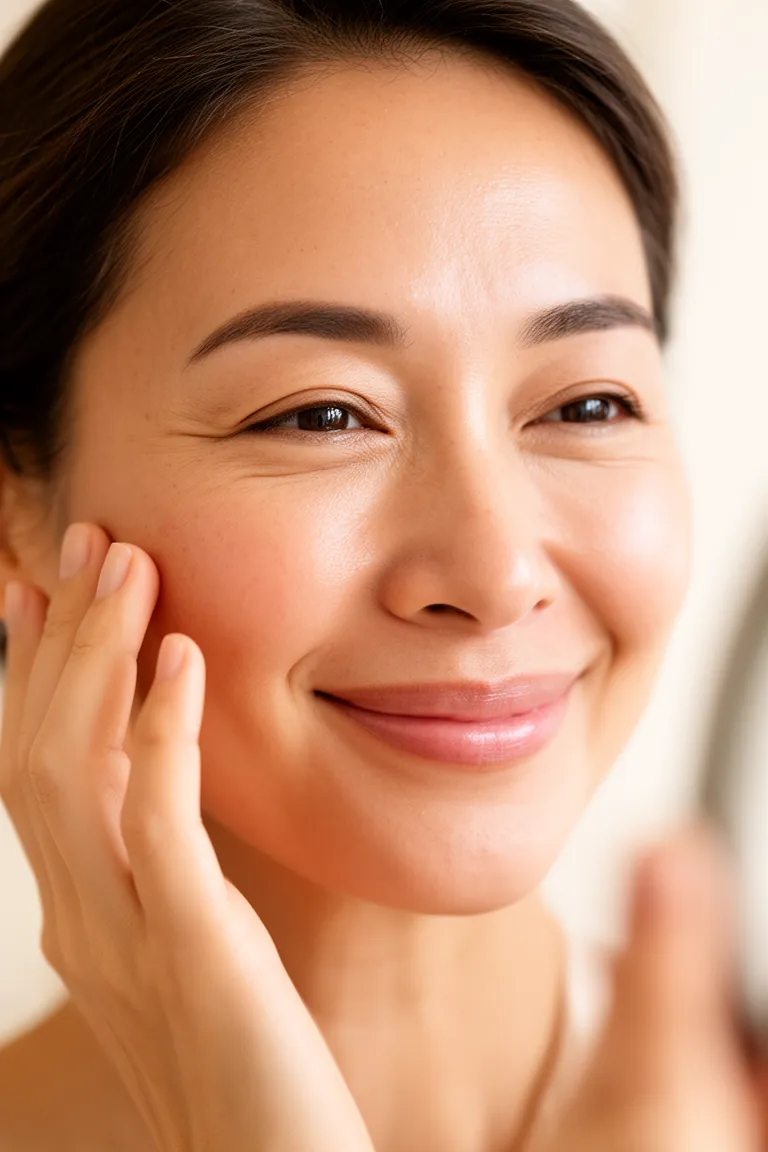
I remember the morning it happened. I was leaning into the bathroom mirror, putting on mascara, when I pulled the skin beside my eye taut out of habit. I let go, expecting it to snap back into place like it always had. It didn’t. It just… settled. Slowly. It was less of a bounce and more of a gentle, resigned deflation. I was 46, a dedicated sunscreen wearer, a vegetable enthusiast, and a regular at my yoga class. I’d done the “right” things. So why was my skin suddenly looking less like my skin and more like a crinkled tissue paper version of it?
For weeks, I’d been dismissing the change as dryness. I slathered on more moisturizer, drank more water, but that hollow, crepey texture on my cheeks and neck remained. It wasn't about being shiny or smooth; it was about substance. The underlying spring was gone. I felt a quiet, frustrating sense of unfairness. I’d followed the rules! I’d avoided sunbathing, I ate my salmon and berries, I got my sleep. Yet here I was, face-to-face with the undeniable proof that my skin was losing its bounce after 40, despite my best efforts.
That moment sparked a two-year journey out of frustration and into a much clearer, kinder understanding. I spent a small fortune on jars promising “lifting” and “firming,” only to feel duped by temporary plumping. I dove into collagen supplements, peptides, and devices, feeling more confused with every purchase. What I eventually learned—through trial, error, and finally, good information—is that how to restore skin elasticity after 40 when skincare is not working isn't about adding one more miracle product. It's about a fundamental shift in strategy: from attacking symptoms to patiently supporting the skin's biology.
The Morning I Noticed My Skin Had Lost Its Bounce
That moment at the mirror wasn't just about vanity; it was a visceral, physical realization that something intrinsic had changed. I poked and prodded, noticing the skin on the back of my hand took longer to flatten after pinching it. The fine lines I could handle, but this was different. This was laxity. It felt like the difference between a brand-new, firm memory foam pillow and one that’s been slept on for a decade—the structure itself was softening. I realized I was grappling with a loss of elasticity versus temporary dryness or dehydration. No amount of hyaluronic acid was going to rebuild the scaffolding.
Why Crepey Texture and Laxity Can Appear in the 40s
I learned that this change often becomes visible in our 40s because that’s when the decline of our skin’s structural proteins—collagen and elastin—hits a critical mass. Our bodies simply produce less each year, and what’s already there becomes more fragmented and disorganized from decades of smiling, squinting, and living. It’s a slow-motion process that suddenly becomes visible in the mirror one ordinary morning. The “bounce” relies on a healthy network of these proteins, and when that network starts to fray, the skin can’t snap back the way it used to.
When Sudden or Asymmetric Changes Warrant Medical Advice
Of course, I also had the fleeting, panicked thought: is this normal aging, or something else? I learned that when sudden or asymmetric changes warrant medical advice. For me, it was symmetrical, gradual, and, sadly, textbook. But if you notice drooping that’s markedly worse on one side, or if it comes on very quickly, it’s always wise to check in with a doctor to rule out other factors. In my case, it was simply time, making its presence known.
Why My Healthy Routine Wasn’t Enough on Its Own
This was the hardest pill to swallow. I’d been so proud of my healthy habits, viewing them as a shield against aging. But they’re more of a buffer, not a force field. Intrinsic aging, collagen turnover, and elastin damage are biological inevitabilities, written into our DNA. My sunscreen use was fantastic for preventing further photoaging, but it couldn’t erase the cumulative UV exposure from my teenage years of baby oil and iodine, or even from incidental sun over decades while driving or walking the dog. That damage was already in the bank, accruing interest.
Menopause-Related Hormonal and Barrier Changes
Then there are the menopause-related hormonal and barrier changes nobody really prepared me for. As estrogen dips, our skin’s ability to retain moisture and produce collagen takes a direct hit. The lipid barrier weakens, making skin more prone to irritation and dehydration, which only exaggerates the appearance of laxity. My skin felt thirstier and more fragile overnight, and no amount of green juice could directly counter that hormonal shift.
What Nutrition, Sleep, Exercise, and Smoking Avoidance Can Realistically Influence
So, while my nutrition, sleep, exercise, and smoking avoidance were absolutely valuable—they keep everything functioning optimally—they can’t single-handedly reverse a complex biological shift. They provide the best possible foundation for skin health, like fertile soil for a plant. But if the plant’s internal structure is aging, the soil alone won’t make it young again. This was my key insight: my healthy lifestyle was necessary, but not sufficient, for tackling the specific issue of lost elasticity.
It’s easy to feel like you’re doing everything right, only to be met with unexpected changes. This realization can be disheartening, but it’s the first step toward finding a more effective strategy.
The Firming Cream Mistakes That Kept Disappointing Me
Armed with worry and a credit card, I entered what I call my “Firming Cream Era.” I bought luxurious jars that promised to “lift,” “sculpt,” and “restore bounce.” I’d apply them, feel a pleasant tightening or see a temporary plump from hydration, and think, “This is it!” By midday, my skin would look exactly the same. I was chasing a ghost. I was making the classic firming cream mistakes that kept disappointing me.
Why Collagen Creams Do Not Replace Dermal Collagen
I had to understand why collagen creams do not replace dermal collagen. The collagen molecules in those creams are far too large to penetrate the skin and integrate into your matrix. At best, they’re good moisturizers that sit on the surface. It’s like trying to repair a crumbling brick wall by throwing whole bricks at it—they just don’t stick where you need them. I was asking a topical product to do a job it was physically incapable of doing.
Humectants and Moisturizers: Short-Term Plumping Versus Lasting Firmness
I also confused humectants and moisturizers: short-term plumping versus lasting firmness. A great moisturizer is essential for a healthy, hydrated barrier (which does help skin look better), but it’s like watering a plant—it plumps up the leaves but doesn’t strengthen the stem. I’d see that initial plumpness and mistake it for structural change. This is a crucial distinction when you’re wondering, “does moisturizer help restore skin elasticity after 40?” The answer is: it helps the appearance immensely, but it’s not rebuilding the scaffolding.
What Actually Changed: SPF, Barrier Care, and One Proven Active
My perspective truly shifted when I read a dermatologist’s quote that stuck with me: “You cannot pour water into a leaky bucket.” My bucket—my skin’s support structure—was leaking collagen and elastin faster than I could possibly hope to replenish it. The first, most crucial step wasn’t adding more; it was patching the holes.
A Practical Morning Routine with Broad-Spectrum SPF 30 or Higher
The biggest “hole” was ongoing photodamage. Even with my SPF use, I wasn’t being militant enough. I started treating broad-spectrum SPF 30 or higher as non-negotiable, every single day, rain or shine, as my sacred act of protection. I learned to apply enough—about a teaspoon for face and neck—and to reapply if I was outdoors. This became the non-negotiable cornerstone of my entire approach.
A Gentle Evening Routine with Moisturizer and Gradual Retinoid Introduction
The second “hole” was a compromised skin barrier from my own over-enthusiastic experimenting. I scaled back to a gentle cleanser and a simple, ceramide-rich moisturizer applied to damp skin. For a full month, I just focused on barrier care. My skin calmed down, looked more even, and felt resilient. This nurturing base was critical before introducing any active.
Then, with my barrier happy, I carefully added one proven active. I chose a retinoid. This time, I committed to gradual retinoid introduction. I started with the lowest concentration, using it one night a week, sandwiched between layers of moisturizer—a technique often called “buffering.” If my skin felt sensitive, I skipped a night. It was an exercise in patience, not force.
| Approach | Best For | Realistic Timeline for Visible Change | Key Consideration |
|---|---|---|---|
| Barrier-Focused Basics (SPF + Moisturizer) | Starting fresh, sensitive skin, or post-procedure recovery | 4–6 weeks for improved hydration & calm | Essential foundation; improves skin appearance but doesn’t directly stimulate collagen. |
| Basics + One Proven Active (e.g., Retinoid) | Those ready to commit to long-term collagen support | 3–6 months for texture; 6–12 months for firmness | Patience is mandatory. Consistency with a gentle formula beats aggressive, irregular use. |
| Multi-Active Layering (Retinoid + Peptides + Antioxidants) | Experienced users with resilient skin seeking comprehensive support | Can complicate timeline; risk of irritation | Requires expert staging (AM/PM) and listening to your skin. More is not always better. |
| Professional Treatment Pathways (e.g., Laser, Microneedling) | After home care plateaus, seeking targeted structural improvement | Varies; often requires a series of treatments | An adjunct to, not a replacement for, daily care. Consultation with a board-certified dermatologist is essential. |
How to Reduce Irritation with Slow Titration and Barrier Support
How to reduce irritation with slow titration and barrier support became my mantra. I never applied retinoid to damp skin, always waited 20 minutes after cleansing, and slathered on moisturizer afterward. I increased frequency only when my skin felt completely comfortable. This slow, respectful approach was the opposite of my earlier “burn and peel” mentality, and it made all the difference.
Alternatives for Pregnancy, Breastfeeding, Eczema, or Retinoid Intolerance
For those with pregnancy, breastfeeding, eczema, or retinoid intolerance, there are gentler alternatives. Ingredients like bakuchiol or certain copper peptides can offer some similar benefits without the same level of potential irritation. The principle remains: choose one supportive active that your skin can tolerate consistently. Functional integrity of aging skin, from cutaneous biology to anti-aging...
My Foray into Supplements and the Collagen Hope
Next, I turned inward. If I couldn’t put collagen on my skin, surely I could build it from within? I became a connoisseur of hydrolyzed collagen peptides, stirring powders into my morning coffee for months. I did see an improvement in my nails and hair, which grew faster and stronger. My skin? It seemed perhaps a bit more hydrated, but that elusive “bounce” remained stubbornly absent. This was my personal experience trying to restore skin elasticity after 40 naturally and realistically through supplementation.
Researching what collagen supplement trials show—and their limitations gave me clarity. Some studies show modest improvements in skin hydration and density, which is great, but the evidence for dramatically restored elasticity in women over 40 is less robust. For me, they became a supportive piece of the puzzle, not the cornerstone. I realized I was asking a supplement to solve a multi-factorial problem that required both internal support and external, topical signaling.
Understanding the science behind what works, and what doesn’t, is empowering. It helps you move past the confusion and invest your energy where it truly counts.
Scientific Evidence
What Results After 40 Can Realistically Look Like
This is the part I wish someone had laid out for me. When you start this protective, supportive approach, the results come in layers, and managing expectations is half the battle.
Expected Timelines for Hydration, Texture, and Fine Lines
Within 4-6 weeks of dedicated barrier care and SPF, my skin’s hydration and overall texture improved. It was smoother, brighter, and more even-toned. That crepey skin and lost elasticity after 40 looked less pronounced because well-hydrated, calm skin reflects light better. This initial win kept me motivated.
Why Prevention May Be More Achievable Than Restoring Lost Elasticity
The collagen-building work of a retinoid operates on a much slower, biological clock. I had to accept that prevention may be more achievable than fully restoring lost elasticity. At about the 4-month mark, I noticed my skin just looked… more supported. Fine lines were softer, not erased. The “deflated” feeling was subtly improved. Significant changes in firmness took consistent, dedicated use for over six months. And “significant” didn’t mean “20-year-old skin.” It meant my 46-year-old skin looked the best it could for 46—firmer, smoother, and healthier. My goal shifted from “reversal” to “optimal aging.”
When Microneedling, Radiofrequency, Laser, or Surgery Merit Consultation
This grounded mindset also helped me rationally consider when microneedling, radiofrequency, laser, or surgery merit consultation. I now see them not as desperate fixes, but as potential amplifiers of diligent home care. I learned why do I still look old even though I have a skincare routine: “What can this realistically achieve for my skin type and goals?” and “How does this work with my current routine?” I haven’t gone down that road yet, but I feel informed, not desperate.
Building Your Best Routine for Crepey Skin After 40
So, what does the best routine for crepey skin and lost elasticity after 40 look like in practice? It’s the simple, consistent system I finally landed on after all my missteps.
My morning is for unwavering protection: a splash of water or the gentlest cleanser, a layer of moisturizer, and my mineral SPF 50. I apply it like it’s my job. My evening is for repair: a double cleanse to thoroughly remove that SPF (a game-changer!), a moisturizer on damp skin, and on alternating nights, my retinoid applied to completely dry skin, followed by more moisturizer. That’s the core. Some nights, I just do cleanse and moisturize. I listen to my skin. I’ve made peace with the fact that this is a marathon of care, not a sprint against time. The journey is about showing up consistently for your skin, not punishing it for changing.
Frequently Asked Questions
Q: How long does it take to see results from retinol for skin firmness?
A: Patience is truly key. You might see improvements in texture and brightness within 4-8 weeks, which is encouraging. However, the collagen-building effects that genuinely impact firmness and elasticity take much longer—typically a minimum of 3-6 months of consistent use, with more noticeable results often appearing after 6-12 months. This is a long-term commitment, not a quick fix. It’s why consistency is more important than strength.
Q: I’ve tried firming creams but my skin is still sagging after 40. Am I wasting money?
A: Not necessarily, but it’s crucial to calibrate expectations. Many firming creams are excellent moisturizers that temporarily plump the skin, which does improve appearance. However, if you’re expecting them to significantly lift sagging skin or rebuild lost collagen, you might be disappointed. Your money is often better spent first on the proven fundamentals: relentless sun protection, a barrier-supporting moisturizer, and a proven collagen-stimulating active like a retinoid.
Q: My skin is losing bounce after 40 even though I wear sunscreen. What am I doing wrong?
A: You’re likely not doing anything “wrong”—this is largely biology at work. However, it’s worth auditing your sunscreen practice: Are you using enough (about a teaspoon for face and neck)? Are you reapplying every two hours if you’re outdoors? Are you using a true broad-spectrum formula? Beyond that, consider the other invisible factors: hormonal shifts, natural collagen decline, and possible barrier issues. Sunscreen is the most critical piece of prevention, but it works best as part of a holistic strategy that addresses these other internal aging pathways.
Q: What should I look for in a retinoid product for mature skin concerned with elasticity?
A: Look for stability and gentleness over high concentration, especially when starting. A formula in an airtight, opaque package helps keep the ingredient effective. For mature skin that may be more sensitive, products that combine a retinoid with soothing ingredients like niacinamide, ceramides, or panthenol can help buffer irritation. The most important thing is finding a formula you can use consistently without causing redness or peeling. It’s better to use a gentle formula regularly than a strong one that forces you to quit.
Q: When should I consider professional treatments for skin elasticity?
A: Consider a consultation with a board-certified dermatologist when you feel your consistent, high-quality home care routine has plateaued—you’re doing everything right but want to explore additional improvement. Treatments like laser resurfacing, radiofrequency, or microneedling can target deeper skin layers to stimulate collagen. A professional can help you understand which, if any, option aligns with your specific goals, skin type, and budget, and how it complements (not replaces) your daily SPF and retinoid routine.
📌 Love this guide? Save it on Pinterest!
Pin Restore Skin Elasticity After 40: My Honest Journey & What Really Works to your board so you can come back to it later.

