
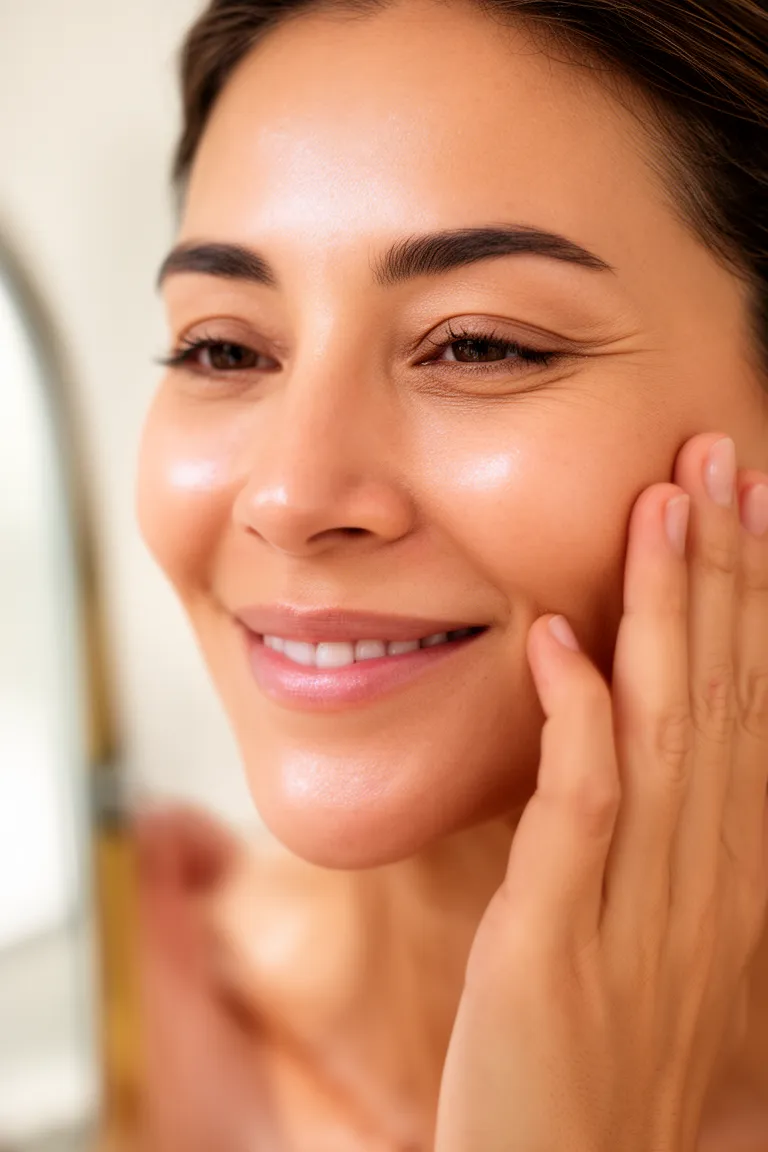
It happened on a Tuesday morning, in the unforgiving light of my bathroom mirror. I was 47, fresh from my morning run, and patting my face dry when I gently pulled at my cheek. It used to snap back. That day, it didn’t. It just… lingered. There was no dramatic sag, no deep crease, just a subtle lack of spring. A quiet surrender. I felt a wave of disbelief. I’ve been the “good” one. SPF 50 every single day, rain or shine. My diet is a rainbow of vegetables, my water bottle is a permanent accessory, and I’ve never met a kale smoothie I didn’t like. I’d done everything the magazines said. So why did my skin feel thinner, less like my skin, and more like a delicate fabric that had been washed one too many times?
That moment sparked a deep, frustrating question that I couldn’t shake: how do you restore skin elasticity after 40 when you’re already checking all the boxes? It felt profoundly unfair. I wasn’t looking for a time machine or glass-smooth perfection; I just wanted the resilience back. The bounce. The feeling that my skin was a living, supportive layer, not just a covering. This wasn't about vanity—it was about identity. I felt like my healthy habits had betrayed me, and I was left staring at expensive jars of “firming” cream, wondering if any of it was more than just expensive hope in a bottle. This is my experience restoring skin elasticity after 40, born from that exact moment of confusion.
The Morning I Realized My Skin Had Lost Its Bounce
That Tuesday wasn't about wrinkles. It was about a fundamental quality change that no amount of hydration seemed to fix. Reduced elasticity after 40 feels different than dryness or a few fine lines. It’s the way your skin drapes instead of hugs. When you smile, it takes a half-second longer to settle back into place, as if it’s thinking about it. The skin on the back of your hand, if you gently pinch it, seems to take its sweet time returning. I remember applying a rich moisturizer and feeling that instant, velvety plumpness, only to realize an hour later that the underlying “snap” was still missing. That was my first, crucial clue: I’d been confusing surface plumpness with true, deep-down resilience. My skin could be perfectly hydrated and still lack elasticity, which meant I was fighting a different battle—one my daily sunscreen, while absolutely crucial, wasn't designed to win alone. This is the emotional mismatch so many of us feel: we’re doing the right things, but the goalposts have moved.
Why Sunscreen and a Healthy Lifestyle Did Not Stop Every Change
I had to sit with a hard, liberating truth: aging is not a punishment for poor habits. It’s a biological process, and some of it is simply non-negotiable. My years of diligence weren’t wasted; they were a shield. But even the best shield can’t stop time. Starting in our mid-20s, we naturally lose about 1% of our collagen each year. By 40, that decline can subtly accelerate, and the elastin fibers that give skin its snap—like the springs in a mattress—begin to fray and lose their tension. My daily SPF 50 was heroically preventing new UV damage, but it couldn't erase the cumulative photoaging from every forgotten hat in my 20s, or that one blistering sunburn at 16 that I still remember. Furthermore, the hormonal shifts of perimenopause quietly change the entire game. As estrogen—a key supporter of collagen production and skin moisture—begins its rollercoaster, skin can become drier, thinner, and more fragile almost overnight. My healthy lifestyle was absolutely slowing the process and keeping my skin radiantly healthy on the whole, but it couldn't freeze-frame my biology. Understanding this helped me release the frustration and stop asking, “Why is my skin losing elasticity after 40 even though I use sunscreen?” The answer wasn’t that I failed; it was that biology is complex. Functional integrity of aging skin, from cutaneous biology to anti-aging...
The Firming Cream Mistakes That Kept Me Chasing Quick Results
Frustration made me an easy target. I dove into the world of “miracle” solutions, desperate for an answer to how to improve skin firmness after 40 when creams are not working. I bought the jars with the most compelling before-and-after photos and the scientific-sounding promises. I aggressively exfoliated, thinking if I could scrub away the top layer, fresh, springy skin would emerge underneath. This phase was not just expensive; it was demoralizing. I learned the hard way that most firming creams are masters of illusion. They’re packed with humectants and polymers that draw water to the very top layer, giving a temporary, tight, velvety firmness that literally washes off. They can’t lift substantial laxity or rebuild collagen from the outside in. My over-exfoliation quest backfired spectacularly, stripping my fragile skin barrier and leaving me red, irritated, and paradoxically more vulnerable-looking. I was chasing quick results and ignoring the slow, steady science of skin remodeling. I was asking a moisturizer to do a structural engineer's job, and then feeling betrayed when it couldn’t.
Shifting from Repair to Support: The Mindset That Changed Everything
Giving up on the quick-fix hunt was the best thing I ever did for my skin and my sanity. I moved from a mindset of “repairing damage” to one of “supporting skin health.” The goal wasn't to find one magic potion but to create a daily, gentle environment where my skin’s natural repair processes could actually thrive. I stopped looking for the single answer and started building a foundation. This meant prioritizing three pillars: Protection (from further damage), Encouragement (gentle stimulation of collagen), and Nourishment (a rock-solid, happy skin barrier). It was less exciting than unboxing a $300 cream, but it was the real turning point. I began to see my routine as tending a garden, not performing emergency surgery.
My Realistic After-40 Elasticity Routine: SPF, Retinoids, and Barrier Care
My routine became simple, consistent, and kind—a form of self-respect rather than a frantic attempt at reversal. best anti aging skincare routine when nothing else worked.
Morning is for defense and nourishment. I start with a creamy, non-foaming cleanser or just lukewarm water. Then, a vitamin C serum—a workhorse antioxidant that helps neutralize free radicals and supports collagen. Next, a moisturizer focused on barrier-supporting ingredients like ceramides, cholesterol, and hyaluronic acid. This isn’t just for moisture; it’s for creating a resilient surface that can hold onto hydration and protect itself. Finally, my non-negotiable broad-spectrum SPF 50. This step is non-negotiable; it protects all the good work I’m doing.
Evening is for gentle encouragement and repair. After a double cleanse with an oil balm and a gentle cream cleanser to remove sunscreen without stripping, the real game-changer comes in: a retinoid. After research and a consult, I introduced it with immense patience. I started low and slow—once a week, using the “sandwich method” (moisturizer, retinoid, moisturizer) on perfectly dry skin. Retinoids are one of the few proven, gold-standard ingredients that can signal your skin to produce new collagen and improve elasticity over months, not days. They are a long-term investment, not a quick fix. On other nights, I might use a peptide serum (which can support skin’s building blocks) or simply focus on deep moisturizing with a richer cream. when I changed my skincare routine my skin looked better. This consistent, patient approach—this best skincare routine to restore skin elasticity after 40 that I finally landed on—did more for my skin’s texture, evenness, and that elusive sense of underlying resilience than any of my aggressive, product-hopping phases ever did.
| Approach | Best For | Realistic Timeline for Noticeable Change | Key Consideration |
|---|---|---|---|
| Barrier-Focused Basics (SPF, gentle cleanse, moisturizer) | Anyone with sensitive, irritated skin or starting from scratch | 2–4 weeks for improved comfort & glow | Essential foundation; won't rebuild collagen but creates the healthy canvas for everything else. |
| Basics + One Active (e.g., Retinoid OR Vitamin C) | Those ready to commit to a proven, steady path | 6–12 weeks for texture; 3–6 months for firmness | Patience is non-negotiable. Consistency over intensity is the key. |
| Multi-Active & Professional Support | Individuals with established tolerance seeking targeted improvement | Ongoing maintenance with periodic boosts | Requires careful layering, possible derm guidance, and a budget for in-office treatments. |
| Professional Treatments as Primary Focus | Targeting specific, moderate laxity that topicals can't address | Varies by treatment (weeks to months) | Home care remains critical for maintenance; this is an enhancement, not a replacement. |
Scientific Evidence
The Silent Partners: How Lifestyle Truly Supports (or Sabotages) Elasticity
I looked beyond the bathroom cabinet. My healthy habits weren't for nothing; I just needed to refine them for this new chapter. Hydration became more intentional—yes to water, but also to healthy fats from avocados, nuts, and salmon, which provide the building blocks for skin’s lipid barrier. Sleep became non-negotiable, because that’s when skin repair and collagen production kick into high gear. I even reassessed my fitness. I learned that intense, long cardio sessions without proper fueling can spike cortisol, which can break down collagen. I added strength training and focused on adequate protein—supporting the underlying facial muscle provides a firmer “scaffold” for skin to sit on. It was about viewing my skin as an organ that reflects my overall internal environment, not just a surface to be treated. This holistic shift answered part of my quest for how to restore skin elasticity after 40 naturally—it’s the quiet, daily background work that makes the topical care shine. does using collagen boosting skincare help if I already eat healthy and drink water.
When Home Care Was Not Enough—and What I Asked a Dermatologist
After a solid year of my consistent routine, I saw real improvement: smoother texture, brighter tone, and a newfound sense of firmness when I touched my cheeks. But there were areas—a very slight laxity along my jawline, a softness at the neck—that topical products couldn't budge. And that’s okay. Accepting that was freeing. It was time for a professional opinion, not out of desperation, but from a place of informed curiosity.
I booked a dermatologist appointment with a list of questions. My goal wasn’t a quick procedure but a conversation. I asked: “Based on my skin type and these specific concerns, what professional treatments could maintain or slightly improve the elasticity I’m building at home?” We discussed options like microneedling and radiofrequency, which can stimulate deeper collagen production in a way creams cannot. I asked about downtime, risks for my skin tone, and, most importantly, realistic expectations. I learned that for what actually works for sagging skin after 40 beyond a certain point, these in-office options are tools, not miracles. It was empowering to approach it as a collaborator in my skin health, finally understanding the landscape of my options.
Letting Go of Perfect and Embracing Resilient
The biggest lesson in my journey wasn't about a product or a procedure. It was about grace. I had to let go of the ghost of my 30-year-old skin. What I gained in return was better: resilient, healthy, cared-for skin that reflects a life well-lived. It has its lines and its history—the laugh lines from my son’s childhood, the faint crinkles from years of squinting at the horizon. But it also has a strength and a glow that no filter can replicate. The pursuit shifted from reversing time to nurturing what I have, fiercely and lovingly. That, it turns out, is the most effective routine of all.
Frequently Asked Questions
Q: How long does it take to actually see improvements in skin elasticity after 40 with a new routine? A: You have to redefine “improvement.” Better hydration and glow can appear in 2-4 weeks. Smoother texture and fewer fine lines might show in 6-12 weeks with an active like a retinoid. But true, measurable changes in firmness and bounce—the kind you can feel—typically take 3-6 months of unwavering consistency. Collagen remodeling is a slow, silent construction project. Patience is the most important ingredient.
Q: I’ve heard retinoids are the best, but they irritate my skin. Am I just not able to use them? A: This is incredibly common, especially with midlife skin that can be thinner and more sensitive. Irritation doesn’t mean you’re banned for life. It means you need to go slower. Start with the lowest concentration, once a week, on top of moisturizer on perfectly dry skin. The “sandwich method” (moisturizer-retinoid-moisturizer) is a lifesaver. If irritation persists, consider a gentle retinoid alternative like bakuchiol, or spend a full month focusing solely on barrier repair with ceramide-rich creams before trying again.
Q: Are professional treatments the only real solution for sagging skin? A: Not at all. For mild to moderate laxity and for overall skin quality, a stellar at-home routine makes a profound difference. Professional treatments are for targeting specific, deeper concerns or providing a significant boost where topicals have maxed out their benefit. Think of home care as your daily diet and exercise—essential for foundational health—and professional treatments as a targeted personal training session.
Q: Can drinking more water or taking collagen supplements restore elasticity? A: Hydration is essential for plump, functioning skin cells, but water alone cannot rebuild lost elastin. The evidence on oral collagen supplements is promising for improving skin hydration and density, which can make skin look fuller and more supple. They work best as a supportive player within a holistic strategy—good diet, topical care, sun protection—not a magic pill that works in isolation.
Q: How do I know if I’m damaging my skin barrier, and what should I do about it? A: Signs include persistent redness, stinging when you apply any product (even gentle ones), tightness, flakiness, or sudden, unexplained breakouts. If this happens, stop everything. Halt all actives (retinoids, acids, vitamin C). For 2-4 weeks, go back to the most basic, soothing routine: a gentle creamy cleanser, a fragrance-free moisturizer packed with ceramides and lipids, and a mineral sunscreen. Let your skin heal. A damaged barrier cannot absorb benefits and will only get worse with more treatment.
📌 Love this guide? Save it on Pinterest!
Pin Restore Skin Elasticity After 40: My Honest Journey & Realistic Routine 2026 to your board so you can come back to it later.

