
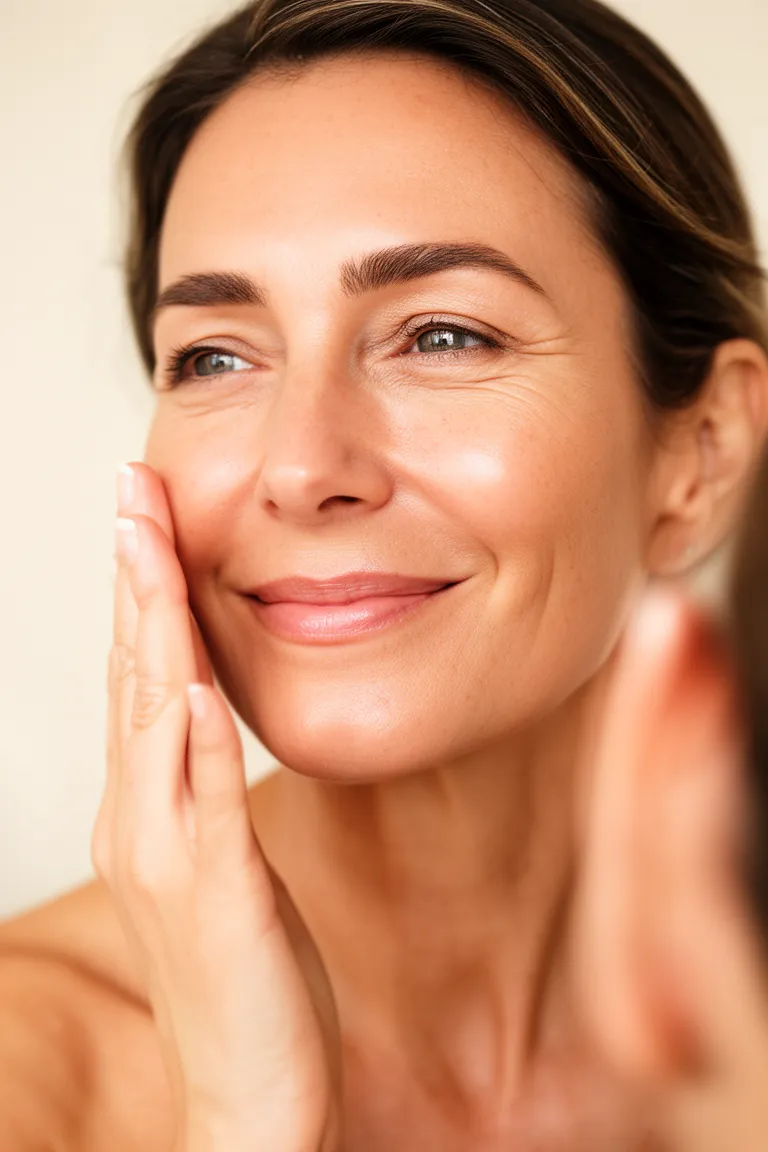
I remember the morning it became undeniable. I was smoothing on my usual moisturizer, the one that had served me well for years, and my cheek didn’t bounce back under my fingertips. It just… stayed there for a second, a little slack, before slowly settling. I leaned closer to the mirror. The skin around my eyes looked thinner, almost crepey, and the defined contour of my jaw seemed softer, like someone had gently blurred the edges. A cold wave of frustration washed over me. I did everything right. I ate my leafy greens and lean proteins, drank water like it was my job, ran three times a week, and slathered on SPF 50 like my life depended on it. I’d earned my laugh lines, but this felt different. This wasn’t character; it was a quiet retreat, a loss of the very bounce and resilience I took for granted. My skin felt like it had resigned overnight, and no amount of healthy living seemed to be getting through to it.
I spent months in a cycle of hope and disappointment. I’d read about a “miracle” firming cream and invest in the tiny, expensive jar, only to find my skin looked marginally more hydrated but no more lifted. I felt like I was speaking a language my skin no longer understood. The real discussions, the ones I found in hushed corners of the internet among women my age, described this exact phenomenon: a sudden loss of bounce, volume, and firmness that seemed to laugh in the face of clean eating and regular workouts. That’s when I realized I wasn’t failing. I was just asking the wrong questions. Restoring skin elasticity after 40, I discovered, isn’t about finding one magic potion. It’s about learning a new language for your skin, one that combines relentless protection, intelligent nourishment, and, most importantly, a heavy dose of realistic expectation.
The Morning I Realized My Skin Had Lost Its Bounce
That moment at the mirror wasn’t about a new wrinkle. It was a fundamental shift in texture and behavior. My skin, once supple and quick to recover, now felt like delicate paper that had been slightly crumpled. When I smiled, the lines took longer to fade. The skin on the back of my hands looked translucent. This is what loss of elasticity can look and feel like after 40: it’s a creeping dryness that no cream fully quenches, a subtle laxity where tightness used to be, and a frustrating sense that your face is slowly losing its architectural integrity. For me, it manifested as a general “draping” feeling—a lack of the underlying spring that used to hold everything up.
What loss of elasticity can look and feel like after 40
It’s not just wrinkles. It’s the way your foundation settles into fine lines it never did before. It’s the skin on your neck feeling looser when you turn your head. It’s your décolletage starting to look creased, like a favorite linen shirt that’s been worn one too many times. The bounce is gone, replaced by a slow, reluctant return to shape.
Why dryness, crepiness, laxity, and facial volume loss can appear together
I learned that this cocktail of symptoms often arrives together because they’re all symptoms of the same underlying breakdown. The scaffolding is weakening. When the support structures—collagen, elastin, fat pads—diminish, the skin has less to cling to, leading to laxity. A thinner skin barrier loses moisture more easily, causing dryness and crepiness. They’re not separate issues; they’re a connected system in decline.
When sudden or asymmetric changes warrant medical evaluation
I also learned to pay attention to asymmetry. When one side of my face seemed to droop more noticeably than the other over a short period, I knew it was time to consult my dermatologist. It turned out to be nothing serious, but her reassurance was crucial. She explained that while sudden or one-sided changes warrant a professional look, the overall, gradual softening I was experiencing was a near-universal chapter in the story of aging skin. Hearing that normalized my panic. I wasn’t broken; I was just on a new page.
Why Eating Well and Exercising Still Did Not Restore My Skin Elasticity After 40
This was my biggest mental hurdle. I felt cheated. I’d upheld my end of the bargain—salads, squats, sleep—so why was my skin reneging? My research and conversations with experts unveiled the sobering truth: while lifestyle is the absolute foundation of health, it cannot single-handedly reverse the biological tide that hits in our 40s. Think of it like this: eating well and exercising are the brilliant, dedicated managers of a factory. But after 40, the factory’s core machinery—the collagen and elastin production lines—naturally starts to slow down and produce less durable goods. My healthy habits were optimizing a declining process, not stopping the decline.
How collagen production and elastin quality change with age
Our bodies produce about 1% less collagen each year after we hit our peak in our mid-20s. By 40, you’re operating at a significant deficit. Even worse, the elastin fibers that give skin its snap become frayed, fragmented, and less functional. They’re like old elastic bands that have lost their stretch. No amount of kale can rebuild them from scratch.
Cumulative UV exposure, oxidative stress, and genetics
Then there’s the silent, cumulative resume of every sunny day I’d ever enjoyed—even the ones with sunscreen. UV exposure breaks down collagen and elastin like sunlight on a rubber band, a process called photoaging. Add in a lifetime of environmental oxidative stress, and genetics that dictate how resilient your skin’s architecture is to begin with, and you have a perfect storm.
Perimenopause, estrogen changes, skin-barrier disruption, and facial-volume loss
The real game-changer for me was understanding hormones. The perimenopause rollercoaster, with its dipping estrogen, directly thins the skin, slows collagen production, and impairs the skin barrier. This leads to that persistent, bone-deep dryness no cream alone can fix. Simultaneously, we lose facial fat pads and bone density. This volume loss is like removing the stuffing from a pillow—the cover (your skin) suddenly appears loose and saggy, even if its quality were perfect.
What nutrition, protein, sleep, exercise, smoking, and alcohol can realistically influence
My good habits weren’t worthless. Adequate protein gives your body the amino acids to build what collagen it still can. Sleep is when repair happens. Exercise boosts circulation. Avoiding smoking and limiting alcohol prevents catastrophic damage. But they are the supporting actors, not the lead. They help your skin be the best version of itself within the constraints of age, not erase those constraints. This was the liberating, if frustrating, truth I needed to accept to move forward.
The Firming Creams I Stopped Buying—and the Ingredients I Kept
My bathroom cabinet became a graveyard of expensive promises. Creams that swore to “lift and firm” with exotic extracts did little but perfume my face and lighten my wallet. I felt a deep sense of frustration, wondering why is my firming cream not working after 40. The turning point was understanding that topical products cannot mechanically lift sagging skin. They can’t re-inflate a deflated fat pad or reattach a drooping muscle. What they can do is improve the skin’s quality, protect its existing structure, and encourage its best possible function. I stopped shopping for miracles and started studying ingredients.
Broad-spectrum SPF 30 or higher for preventing additional collagen damage
I divided my approach into two non-negotiable pillars: defense and repair. For defense, nothing—and I mean nothing—beats a broad-spectrum SPF 30 or higher. It’s the ultimate guard against additional collagen damage. Every morning, rain or shine, it goes on. This is the single most impactful thing you can do. It’s not glamorous, but it’s non-negotiable.
Retinoids: evidence, gradual introduction, irritation, and pregnancy precautions
For repair, I focused on actives with real evidence. I introduced a retinoid slowly, which helps speed up cell turnover and signal collagen production. I started using it just one night a week, over my moisturizer to buffer it, and slowly built up tolerance. It’s not a quick fix; it’s a long-term investment. (A crucial note: retinoids are not recommended during pregnancy or breastfeeding.)
Peptides, vitamin C, niacinamide, hyaluronic acid, ceramides, and moisturizers
I learned about peptides, those little messengers that can tell the skin to behave youthfully. I kept a vitamin C serum for its antioxidant protection, which helps fend off new damage. And I embraced humble heroes: hyaluronic acid to pull water into the skin for plumping, ceramides to repair my compromised skin barrier, and a simple, effective moisturizer to seal it all in. These became my toolkit, not for an instant fix, but for the long, steady haul of improvement.
Why topical collagen and ordinary firming creams cannot mechanically lift sagging skin
I finally understood why those expensive jars failed. Topical collagen molecules are too large to penetrate deeply and become part of your skin’s structure. They can be moisturizing, but they’re not building new scaffolding. “Firming” creams often rely on temporary tightening agents or hydration to create an illusion of lift that washes off. The real work is slower, cellular, and invisible at first.
What Improvement Actually Looked Like After 8, 12, and 24 Weeks
This was the content gap I desperately needed filled. Every article listed ingredients but never said what happened next. I wanted a roadmap. So, I committed to my new, simpler routine and decided to track my progress with brutal honesty, not hopeful滤镜. Here’s what improvement actually looked like after 8, 12, and 24 weeks in my experience with skin losing firmness after 40.
Early changes: hydration, comfort, and temporary surface plumping
After 8 weeks, the changes were subtle but meaningful. My skin was more comfortable—that tight, itchy, dry feeling was gone. It looked plumper first thing in the morning, thanks to consistent barrier repair. This was the “glow” people talk about. It wasn’t firmness yet, but it was a relief. My skin felt cared for, not attacked.
Later changes: texture, fine lines, and modest firmness from consistent retinoid use
By 12 weeks, the texture had improved. The crepiness around my eyes was less pronounced, and my skin felt smoother to the touch. The fine lines from dehydration were visibly softer. There was a modest firmness, a sense of better tone, especially in my cheeks. When I pressed my skin, it bounced back a little quicker. This, I believe, was the early payoff from consistent retinoid use. It wasn’t a dramatic lift, but it was a definite improvement in quality.
Why deeper laxity and volume loss may not respond to home care
But at 24 weeks, I had my real moment of clarity. The deeper laxity along my jawline, the one that started this whole journey, was still there. It was perhaps slightly improved, but it hadn’t vanished. This was the hard truth: topical care can work wonders on skin quality, texture, and fine lines, but significant lifting of deeper laxity and volume loss often lives in the domain of professional procedures. That realization wasn’t defeatist; it was liberating. It helped me appreciate what my home care was achieving and set realistic goals.
When to discuss prescription retinoids, procedures, or menopause-related care with a clinician
This is when I booked a follow-up with my dermatologist. We discussed prescription-strength retinoids for greater effect and had an honest conversation about what in-office treatments like laser or radiofrequency could address that my creams cannot. Knowing there are effective next steps available is empowering, not a sign that I’ve failed at home care.
How I Built a Skin-Elasticity Routine I Could Finally Maintain
Armed with this knowledge, I built a skin-elasticity routine I could finally maintain. The key was simplicity and consistency over complexity and burnout. I stopped trying to do everything and focused on doing a few things religiously.
| Approach | Best For | Realistic Timeline for Visible Change | Key Consideration |
|---|---|---|---|
| Lifestyle & Protection Only | Anyone starting out or overwhelmed. Focus on SPF, diet, sleep, hydration. | 12+ weeks for overall skin health glow | Foundational but won’t reverse existing laxity. Essential first step. |
| Lifestyle + 1–2 Key Actives | My sweet spot. Adding a retinoid and an antioxidant to the foundation. | 8–12 weeks for texture; 3–6 months for firmness | Requires patience and gradual introduction to avoid irritation. |
| Comprehensive Topical Regimen | Those not seeing enough results from basics and willing to invest time. | May accelerate texture results; firmness timeline similar | High risk of irritation and “product fatigue.” More is not always better. |
| Topical + Professional Guidance | When home care plateaus and deeper structural concerns remain. | Varies by procedure; topical routine supports and maintains results | In-office treatments address layers topical products cannot reach. |
A simple morning routine: cleanse, antioxidant if tolerated, moisturize, and sunscreen
My morning routine is now a non-negotiable five minutes: a gentle, creamy cleanse, a vitamin C serum (on days my skin feels robust), a peptide-rich moisturizer, and my holy-grail sunscreen. That’s it. The goal is protection and hydration.
A gradual evening routine: cleanse, retinoid on selected nights, moisturizer, and recovery nights
The evening is where the repair happens. After double-cleansing to thoroughly remove sunscreen, I use my retinoid two to three nights a week, always followed by a rich, calming moisturizer. The other nights are for recovery—just a hydrating serum packed with ceramides and a moisturizer. This rhythm prevented the irritation that made me quit in the past.
How to adapt for dry, sensitive, acne-prone, or menopausal skin
I learned to listen. During a hormonal flare-up or in harsh weather, I’d skip the retinoid and focus solely on barrier repair for a few days. For sensitive skin, the “sandwich method” (moisturizer, retinoid, moisturizer) is a lifesaver. The routine isn’t rigid; it’s a responsive dialogue with your skin.
A weekly tracking method for irritation, hydration, texture, and firmness
I started a simple note in my phone every Sunday night: “Skin feels: calm/irritated. Looks: hydrated/crepey. Tone: firm/soft. Notes: (e.g., ‘retinol night went well’).” This 30-second check-in wasn’t obsessive; it was observational. It helped me connect cause and effect and celebrate the slow wins, like a week where my skin felt “bouncy” again. This routine became less about fighting my face and more about caring for it.
Scientific Evidence
Beyond the Bottle: The Supporting Acts I Was Missing
While I had the nutrition basics down, I dug deeper into what my skin specifically needed to build its blocks. How to restore skin elasticity after 40 naturally isn't just about what you put on your skin, but what you feed it from within.
I ensured I was getting adequate protein at every meal—collagen is, after all, a protein. I embraced healthy fats from avocado, nuts, and fatty fish for their anti-inflammatory and hydrating benefits. I viewed my omega-3 supplements and collagen peptides not as magic bullets, but as helpful additions to a solid dietary foundation. The question, does collagen help skin elasticity after 40 or am I wasting money, is common. For me, it seemed to enhance hydration and support my nails and hair, making it a worthwhile part of my holistic strategy, not a standalone solution.
I became militant about sleep and experimented with stress management (even just five minutes of deep breathing), because high cortisol literally tells your body to break down collagen. And of course, I don’t smoke and limit alcohol, as both are catastrophic for skin elasticity. These weren’t new rules, but they became non-negotiable supports for my topical efforts. They were the soil in which my skincare routine could actually take root and thrive.
How I Made Peace With My Reflection
The most profound shift wasn’t in my skin, but in my perspective. I stopped chasing the skin of my 30s. My goal was no longer “restoration” to a past state, but “optimization” of my present one. I wanted my skin to be the healthiest, most resilient version of itself at 44, and then at 45, and so on. This reframe took the desperation out of my routine.
I now see my dermatologist as a partner, not a last resort. We have honest conversations about the journey, acknowledging both the power of consistent care and its limits. Knowing there is a continuum of care—from my daily SPF to prescription options to professional treatments—is empowering. It means I’m not at a dead end; I’m on a path.
My journey to improve sagging skin after 40 taught me that it’s a multi-front campaign. There’s no single hero, only a dedicated army of good habits, smart ingredients, and tempered expectations. My skin today is not the skin of my youth. But it is hydrated, strong, glowing, and cared for. It has the best texture I can give it, and yes, a little more bounce than on that frustrating morning. The resilience I lost in my skin, I found in my approach.
Frequently Asked Questions
Q: How long does it really take to see results when trying to restore skin elasticity after 40? A: You need to think in seasons, not weeks. For hydration and surface texture improvements, you might see a difference in 4-8 weeks. For more noticeable changes in firmness and fine lines from ingredients like retinoids, a solid 3-6 months of consistent use is a realistic timeline. Deeper structural laxity may show only modest improvement with topical care alone, which is why setting expectations is so important.
Q: I’m overwhelmed by actives. Do I need retinol, vitamin C, AND peptides? A: No, and please don’t start them all at once. That’s a recipe for irritation. Start with the cornerstone: a broad-spectrum sunscreen every morning. Then, introduce one active at a time. Many people begin with a retinoid at night, 2-3 times a week, and master that for a few months. You can later add a morning antioxidant like vitamin C. Peptides are gentle and can often be used alongside others. A simple, consistent routine with one or two well-chosen actives is far more effective than a complex, irritating one.
Q: I keep hearing about collagen supplements. Am I wasting my money? A: This is a hot topic. The evidence is mixed but growing. Think of collagen supplements not as a direct patch for your skin, but as providing your body with the concentrated building blocks it needs to produce its own collagen and other supportive proteins. For some people, it seems to improve skin hydration and elasticity over time. It’s not a magic fix, but if you view it as a supportive part of a holistic strategy (good diet, topical care, sunscreen) and choose a reputable, third-party tested product, it may be a helpful addition, not a waste.
Q: My skin is sensitive and gets irritated easily. Can I still use these ingredients? A: Absolutely, but with extra caution. The “slow and low” mantra is your best friend. Choose a gentle retinol derivative or a bakuchiol alternative. Use peptides and ceramides, which are great for sensitive skin. Always patch test new products. Apply actives over top of your moisturizer to buffer them (“sandwich method”), and give your skin plenty of recovery nights. Listening to your skin and prioritizing barrier repair is even more crucial for you.
Q: When should I consider professional treatments instead of just home care? A: Consider a consultation with a board-certified dermatologist or a trusted aesthetic professional when you feel your topical routine has plateaued and you’re still bothered by specific concerns like significant volume loss, deep folds, or skin laxity that doesn’t respond to creams. Treatments like laser resurfacing, radiofrequency, or ultrasound can target deeper layers of the skin that topical products cannot reach. A good pro will help you understand which, if any, options align with your goals and will always emphasize that these procedures work best in conjunction with a solid at-home skincare regimen.
Q: What should I look for in skincare products if I want to focus on elasticity? A: Look beyond the “firming” marketing on the box. Turn the bottle over. Prioritize products that contain evidence-backed ingredients like retinoids, peptides, vitamin C (ascorbic acid or stable derivatives), niacinamide, and hyaluronic acid. For your moisturizer, look for barrier-supporting ingredients like ceramides, cholesterol, and fatty acids. The formulation and stability matter as much as the ingredient list, which is why sticking with well-established, reputable lines is often wiser than chasing trendy, unproven brands.
📌 Love this guide? Save it on Pinterest!
Pin Restore Skin Elasticity After 40: My Honest Journey 2026 to your board so you can come back to it later.

