
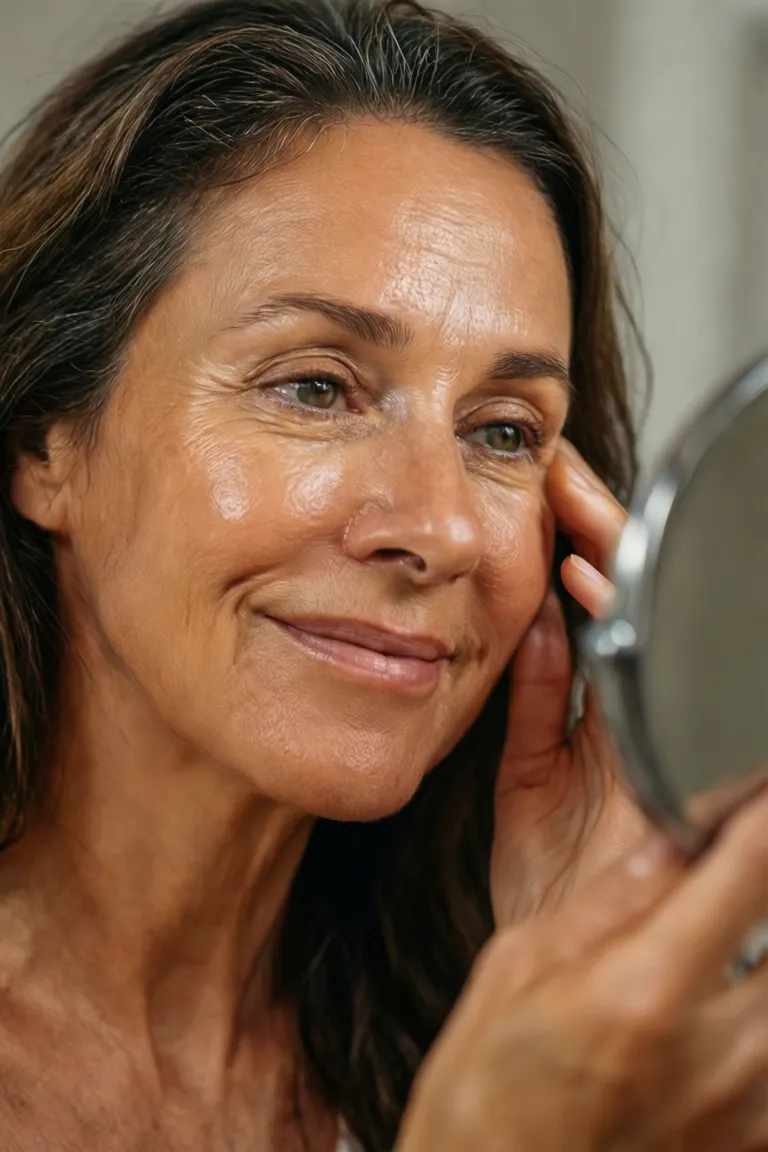
I was standing in the harsh, unforgiving light of a hotel bathroom, trying to put on mascara without my glasses. I leaned in close to the mirror, and there it was—a softness along my jawline that wasn’t there a year ago. Not a wrinkle, but a subtle letting-go, a gentle descent where my cheek used to meet my neck with more conviction. I pulled back, stunned. My immediate thought wasn’t about aging gracefully; it was a sharp, frustrated, “But I’ve done everything right.”
I’m the friend who brings the salad to the barbecue. I’ve worn SPF 50 like a second skin since my twenties. I drink water, I sleep eight hours, I move my body. And yet, here was my skin, quietly changing its mind about gravity. I felt betrayed, not by time, but by the promise that discipline could ward off every visible sign of it. That moment sparked a long, often frustrating, but ultimately enlightening journey to understand what it really takes to restore skin elasticity after 40 when the basics, it seems, are no longer enough.
The Morning I Realized My Healthy Routine Wasn’t Preventing Sagging
That hotel mirror moment cracked open a quiet anxiety I’d been ignoring. In the weeks that followed, I became a detective in my own life, scrutinizing my reflection in car windows and the dimmed screen of my laptop. I noticed it wasn’t about lines; it was about a loss of definition. The apple of my cheek seemed to have drifted south just a little, creating a soft, new plane. When I pressed my finger into my skin, it didn’t spring back with its old, lively resilience. It was a slow, gentle deflation.
I had believed in a simple equation: Healthy Habits = Preserved Skin. I thought my sunscreen was a force field, my leafy greens were internal armor. And they were—just not for this. Sunscreen is a brilliant, necessary shield against future damage and pigmentation, but it can’t rebuild the scaffolding that’s already been quietly weathering a lifetime of mornings, laughs, and turning your head to check a blind spot. My healthy routine was an excellent prevention strategy, but I was now facing a restoration project I hadn’t seen coming. This was the core of my frustration: I wear sunscreen but still have sagging skin after 40. The rulebook I’d followed so diligently didn’t have a chapter for this.
What Actually Changes Skin Elasticity After 40
My frustration led me to dig deeper, and what I found was strangely comforting. It wasn’t that I’d failed; it was that I’d underestimated the silent, structural shifts happening beneath the surface. To understand what actually changes skin elasticity after 40, I had to stop thinking about my skin as just a surface and start seeing it as architecture.
Think of young skin like a new, high-quality mattress. The top layer is plush and smooth, but the real support comes from the deep, coiled springs (collagen) and the resilient, bouncy foam (elastin). After 40, our bodies naturally produce less collagen each year—about 1% less, which adds up. More critically, the elastin fibers, once so supple, start to fray and lose their snap, like an old elastic band that’s been stretched one too many times. This is the genetic blueprint, the natural timeline we all follow.
But there are powerful accelerators. The biggest is cumulative sun exposure, or what dermatologists call solar elastosis. Every school run, every gardening hour, every drive with the window down—even with SPF—adds up over decades. This UV damage doesn’t just tan you; it degrades those crucial support fibers deep in the dermis, turning them into a weak, tangled mess that can’t hold shape. Then, layer on the hormonal shifts of perimenopause and menopause. The decline in estrogen directly impacts skin thickness, hydration, and its ability to produce collagen. I finally understood: my skin wasn’t being disobedient. It was operating on a new, less forgiving set of biological rules where skin elasticity disappeared after 40 not because of a mistake, but because of a perfect storm of time, sun, and biology.
Why My Firming Creams and Collagen Products Barely Changed Anything
Armed with this new knowledge, I did what many of us do: I went shopping for solutions. I invested in luxury firming creams that promised “lifting” and “recontouring.” I bought the expensive hydrolyzed collagen peptides, diligently stirring them into my morning coffee like a magic powder. For months, I was devout. And the result? My skin was perhaps a bit more hydrated, a little plumper when I first woke up, but that fundamental softness along my jaw? Unmoved. I was left wondering, “does collagen help with skin elasticity after 40 or am I wasting money?”
I learned I was confusing surface-level plumping with genuine structural change. Most over-the-counter firming creams work by delivering intense hydration and humectants to the very top layer of skin. This can temporarily plump up fine lines and give a dewy, “bouncy” feel—which is lovely—but it does nothing to repair the deeper, collapsed collagen and elastin matrix that’s causing the sag. It’s like fluffing the pillows on a sagging sofa; the surface looks better, but the structure is still compromised.
As for oral collagen supplements, the science is nuanced. Some promising studies show they can increase skin hydration and dermal density because the peptides may signal your body to produce more collagen. But the translation to visibly “lifting” already-loose skin on the face is subtle at best. For someone like me, looking to restore skin elasticity after 40, they felt like a single, small brick when I needed to rebuild a whole foundation. They’re not a magic bullet, but perhaps a supportive player in a much larger cast. [Functional integrity of aging skin, from cutaneous biology to anti-aging...
The Shift: From Miracle Cures to Consistent Support
Giving up on the quick fixes was the best—and hardest—thing I ever did. It meant admitting that no jar, no matter how expensive, contained a miracle. But that surrender freed me. It freed me to focus on what decades of dermatological research and wise practitioners actually recommend: a long-game strategy of consistent, intelligent support. I stopped looking for a hero product and started building a hero routine. The goal shifted dramatically from “reverse” to “reinforce, protect, and gently encourage.”
This mindset shift was everything. Instead of feeling defeated when a cream didn’t work in six weeks, I started playing the long game. I began to see my skincare not as a desperate rescue mission, but as daily, nurturing maintenance for a structure that needed more care than it used to. This was the turning point in my experience restoring skin elasticity after 40.
The Routine I Could Follow Long Enough to Notice a Difference
This wasn’t about adopting a complex, 12-step ritual that would overwhelm me by week two. It was about intentional, consistent steps that directly supported my skin’s new biological reality. I built a sustainable framework.
Morning became about protection and preparation. A gentle, non-stripping cleanse, a vitamin C serum (a well-researched antioxidant that helps protect collagen and can boost its production), a rich moisturizer focused on barrier repair with ingredients like ceramides, and my faithful, broad-spectrum SPF 50. I became militant about reapplication if I was spending more than two hours outside, and I embraced hats and shade as my new best friends.
The real change, however, came at night. This is where I addressed the structure. I carefully introduced a retinoid, starting with a low-concentration over-the-counter retinol just twice a week, applied over completely dry skin to minimize irritation. I’d follow it with a soothing, nourishing moisturizer. Does retinol help restore skin elasticity after 40? The evidence says yes, but it’s a marathon, not a sprint. Retinoids work by encouraging cellular turnover and, most importantly, by signaling your skin to produce new collagen. But they are slow, and they demand respect. I learned to listen to my skin—a little pinkness was okay, but stinging meant I needed to scale back and strengthen my barrier first.
I also looked inward. I focused on getting enough protein (the building block of collagen), vitamin C-rich foods (essential for collagen synthesis), and healthy fats. I swapped my cotton pillowcase for silk to reduce sleep creases and tugging. I tried—and still try—to sleep on my back. It was a holistic embrace of the fact that skin health is whole-body health. best stretch mark cream that worked for my thighs and hips
| Approach | Best For | Realistic Timeline for Noticeable Change | Key Consideration |
|---|---|---|---|
| Lifestyle & Prevention Foundation (SPF, diet, sleep) | Maintaining current skin health & preventing further loss. The essential, non-negotiable base. | Prevention is ongoing; halting further damage is an immediate win. | Critical for everyone, but alone, it won't reverse existing laxity. |
| Targeted Topical Support (Retinoids, Peptides, Barrier Care) | Those ready to commit to a consistent routine to gently improve firmness and texture. | 3-6 months for subtle firmness; 12+ months for more noticeable improvement in elasticity. | Requires patience and consistency. Irritation means you're moving too fast. |
| Combined Topical + Professional Treatments | Addressing moderate laxity where topicals have plateaued. For more pronounced structural goals. | Professional results can be seen in weeks, but require maintenance. Combined with topicals for longevity. | Significant investment (time, money, potential downtime). Requires a trusted, board-certified provider. |
Scientific Evidence
The Unsexy Truth About Timelines and Expectations
Here’s the part that truly fills the content gap, the truth I needed to hear: doing all of this correctly is quiet, unglamorous work. You don’t wake up in a month transformed. This journey to improve skin elasticity after 40 is a lesson in delayed gratification. Improved hydration and a glow from vitamin C might show in a few weeks. But the changes in firmness and elasticity—the kind that subtly lifts that softness along the jaw—from ingredients like retinoids? We’re talking three to six months minimum to see even modest improvement, and a solid year for more convincing results.
My own timeline was humbling. At three months, my skin was smoother. At six months, the texture was more refined, and I felt a certain “tightness” (the good kind) when I cleansed. But it was around the nine-month mark, when I compared a photo to one from the start of my journey, that I saw it: the shadow under my jaw was lighter, the contour a bit sharper. The change wasn’t dramatic; it was a gradual reclamation. How long does it take to improve skin elasticity after 40? Longer than any product label will ever admit.
When Home Care Isn’t Enough—and What Results Can Realistically Look Like
After a dedicated year of this disciplined care, I had to have an honest conversation with myself in the mirror. While my skin’s quality, hydration, and overall resilience were vastly improved, and some firmness had returned, there was a certain degree of laxity—particularly along my jawline—that topical products were never going to fully address. This is the critical, often omitted, truth. For skin significantly altered by decades of sun (solar elastosis) or a genetic predisposition to laxity, at-home care has its biological limits.
This realization isn’t a failure; it’s empowerment. It led me to consult a dermatologist. We talked about the spectrum of professional treatments for skin elasticity after 40 versus home remedies. Options like radiofrequency microneedling and ultrasound treatments work by delivering controlled energy deep into the dermis, creating micro-injuries that trigger a powerful, focused wave of collagen remodeling—something creams simply cannot achieve from the surface. These are investments with modest, natural-looking results. They’re not a facelift, but they can provide that extra 20-30% improvement that tips the scales from “I’ve done all I can” to “I’m really happy with this.”
Understanding this spectrum allowed me to appreciate what my home routine had achieved—a healthier, stronger, more radiant canvas—and make a peace of sorts with what it couldn’t. It helped me see the best way to improve loose skin and elasticity after 40 is often a layered approach: unwavering home care for health and maintenance, with the option of professional intervention for targeted structural goals. anti wrinkle cream even though I eat healthy and drink lots of water
The Mindset That Made All the Difference
Ultimately, the biggest shift wasn’t in a serum or a supplement; it was in my head. I stopped seeing my skin as a problem to be solved, a betrayal to be corrected, and started seeing it as a partner—one that had carried me through decades of laughter, sunshine, and life, and now needed a different kind of support. The pursuit to restore skin elasticity after 40 became less about recapturing the face of my 30s and more about nurturing the health, strength, and resilience of the face I have now.
The discipline of sunscreen felt less like a chore and more like an act of love for my future self. The gentle consistency of my evening routine became a form of mindful self-care, a quiet moment of investment. In that shift, I found a different kind of firmness—one of acceptance, knowledge, and empowerment. The journey taught me that while I can’t control the passage of time, I can choose how I meet it: not with frustration over what’s been lost, but with consistent care for what remains. dermatologist recommended anti wrinkle cream that doesn’t damage skin barrier
Frequently Asked Questions

Q: How long does it really take to see improvements in skin elasticity from a new routine? A: You must manage expectations from the start. Improved hydration and brightness can appear in a few weeks. But for tangible changes in firmness and elasticity—the kind that addresses mild sagging—you need to commit to at least 3 to 6 months of consistent use of actives like retinoids or peptides. Significant collagen remodeling is a slow process; true, lasting results often take a year of dedicated, patient care. This was the hardest but most important lesson in my journey.
Q: I’ve heard retinoids are harsh. How do I start using one without damaging my skin? A: The key is “low and slow.” Start with an over-the-counter retinol, not a prescription strength. Apply a pea-sized amount only twice a week, at night, over completely dry skin (wait 20 minutes after washing), and always follow with a moisturizer. If your skin tolerates it after two weeks, move to every other night. Never use it on damp skin, as that drives it deeper and increases irritation. Sunscreen the next morning is non-negotiable. Listen to your skin—a little dryness is normal, but stinging, burning, or severe peeling means you should take a break and focus on barrier repair.
Q: Are collagen supplements worth the money for someone in their 40s? A: The research is promising but not a guarantee. High-quality hydrolyzed collagen peptides may improve skin hydration, density, and support your body’s own collagen production over time. However, don’t expect them to act like a “lift” in a bottle. Think of them as a potential supportive supplement to a solid topical routine, not a standalone solution. If you try them, look for types I and III, give it at least 3-6 months, and temper your expectations. For me, they were a small piece of a much larger puzzle.
Q: When should someone consider professional treatments instead of just more products? A: If you’ve been hyper-consistent with a robust skincare regimen (daily SPF, a retinoid, antioxidants, barrier support) for over a year and are still dissatisfied with the level of laxity, especially in the lower face, jawline, and neck, it’s a sensible time to consult a board-certified dermatologist. Procedures like radiofrequency, laser, or ultrasound treatments target deeper layers for more pronounced collagen building. They are logical for mild-to-moderate laxity when topicals have plateaued. It’s about shifting from surface management to structural support.
Q: Can facial exercises or gua sha help restore elasticity, or could they make things worse? A: This is a popular topic with limited robust science. Gentle facial massage or gua sha may reduce morning puffiness, improve circulation, and feel relaxing, which can decrease tension and improve appearance. However, there’s no strong evidence it rebuilds collagen or elastin. More concerning, aggressive facial exercises or repetitive, forceful pulling could potentially break down collagen and stretch skin over time. I use gentle, upward strokes for lymphatic drainage and relaxation, but I don’t rely on it for structural change.
📌 Love this guide? Save it on Pinterest!
Pin Restore Skin Elasticity After 40: My Honest Journey & What Really Works 2026 to your board so you can come back to it later.

